

Executive Summary
Over 110 CEOs and CFOs participated in the July edition of IMA’s quarterly Business Confidence and Performance Index (BCPI) survey.
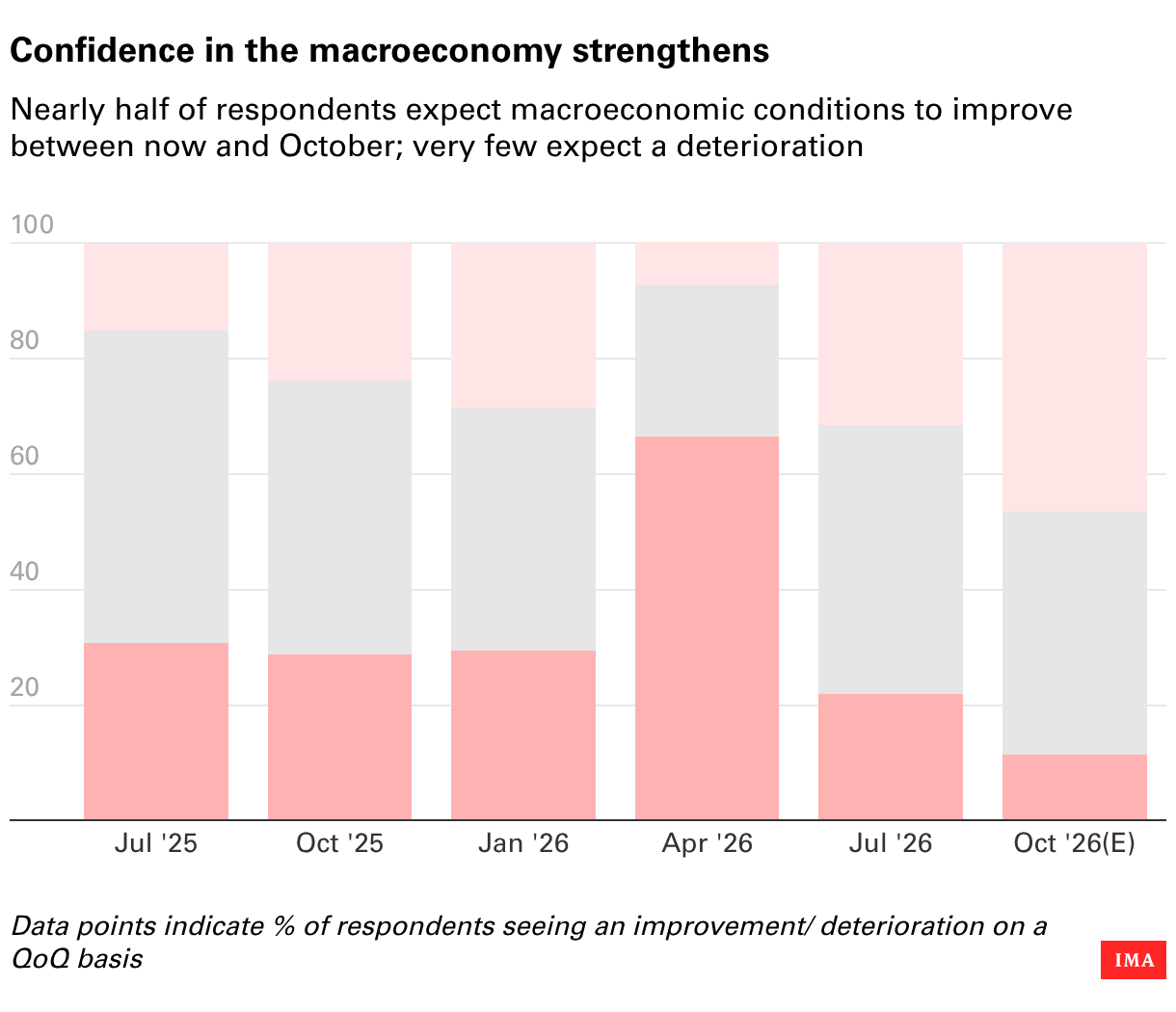
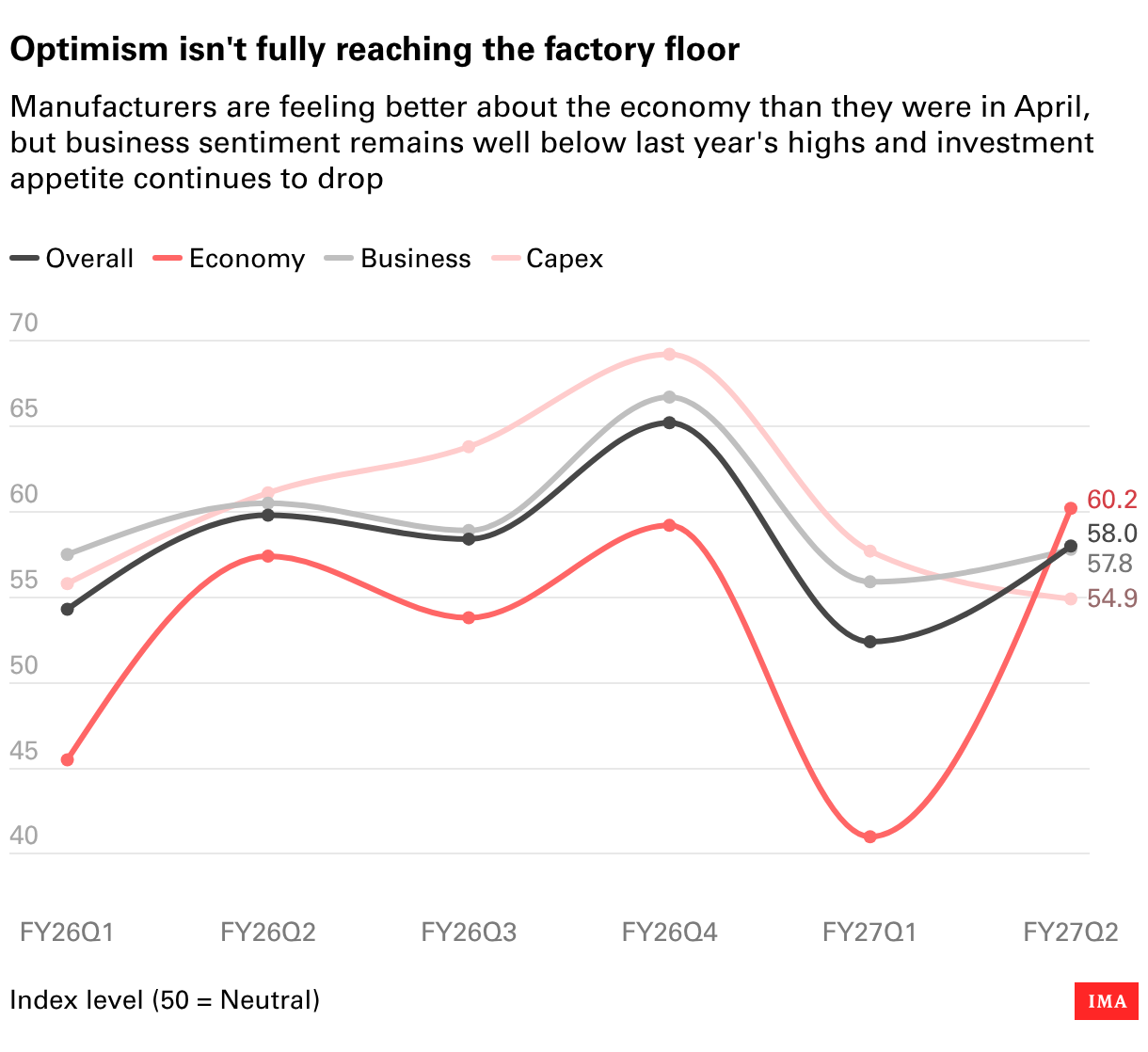
Having fallen sharply in April, the headline BCPI rebounded 6.8 points to 60.1, driven by a sharp improvement in macroeconomic sentiment.
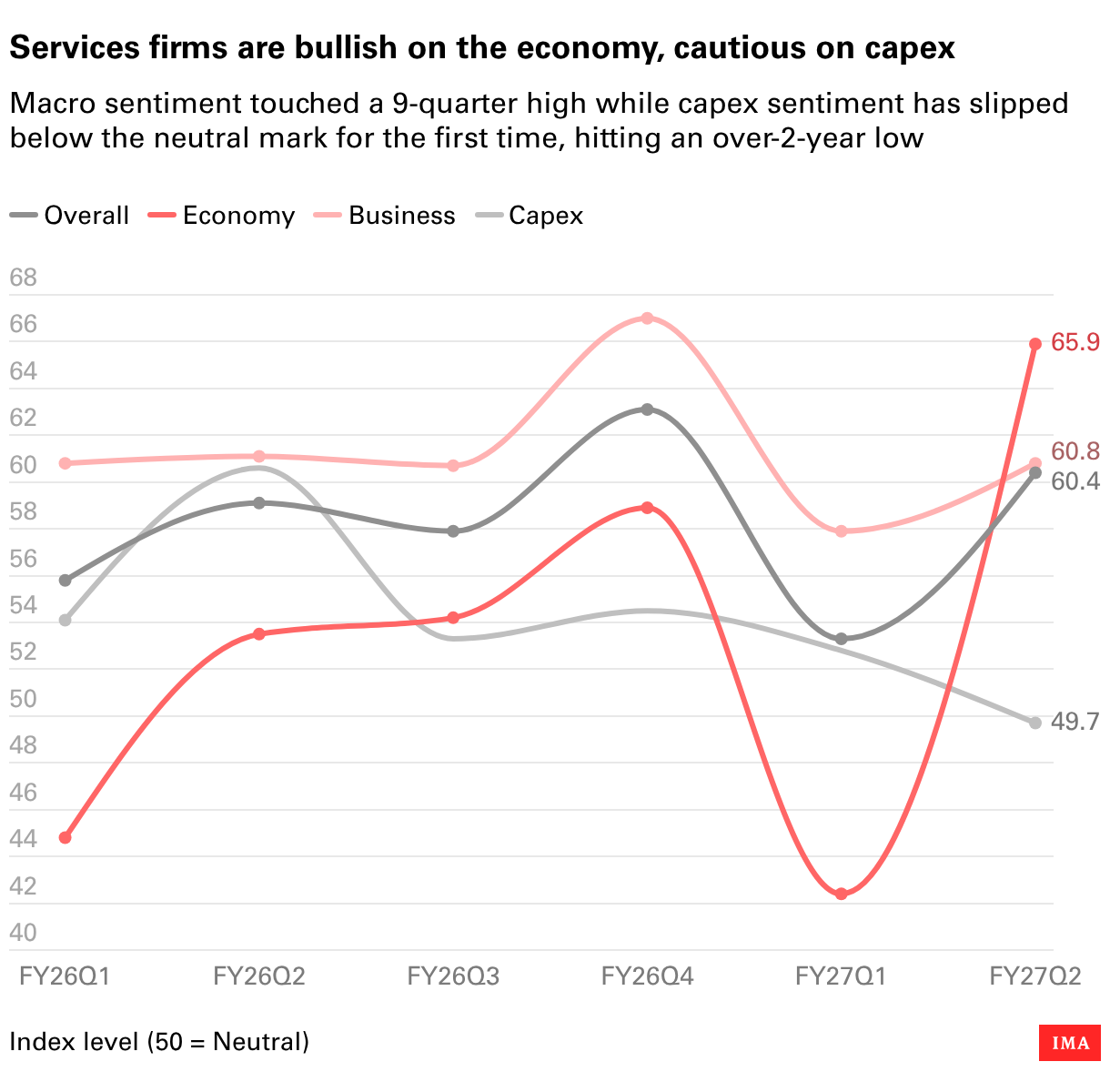
Mirroring its 15-point fall in April, the economy index surged 20 points to an 8-quarter high.
Business sentiment continued to improve more gradually and the capex index held constant.
Sales, profitability and capacity utilisation expectations strengthened, with BFSI, automotive and industrials leading the recovery. Consumer goods firms remain weak on all these fronts.
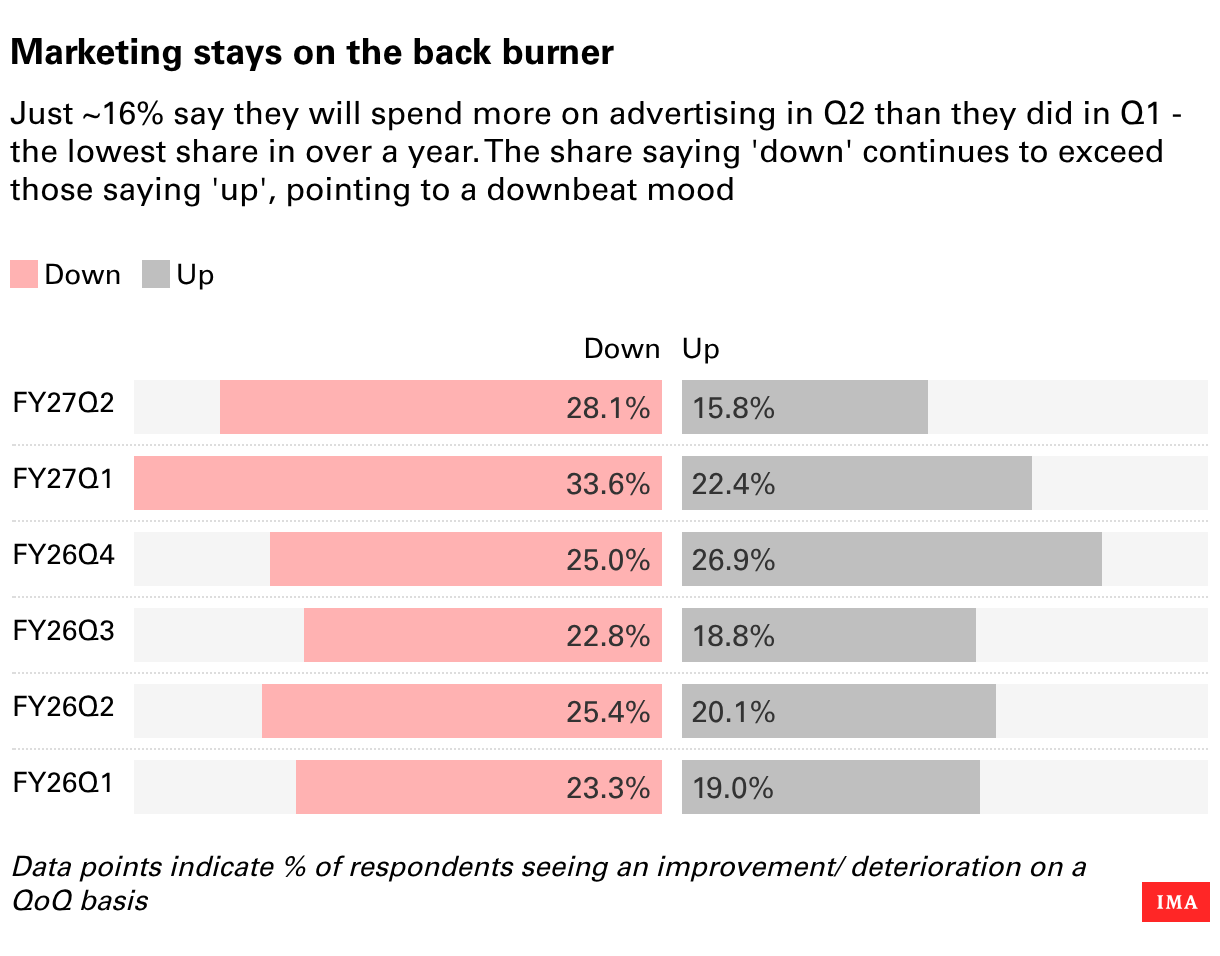
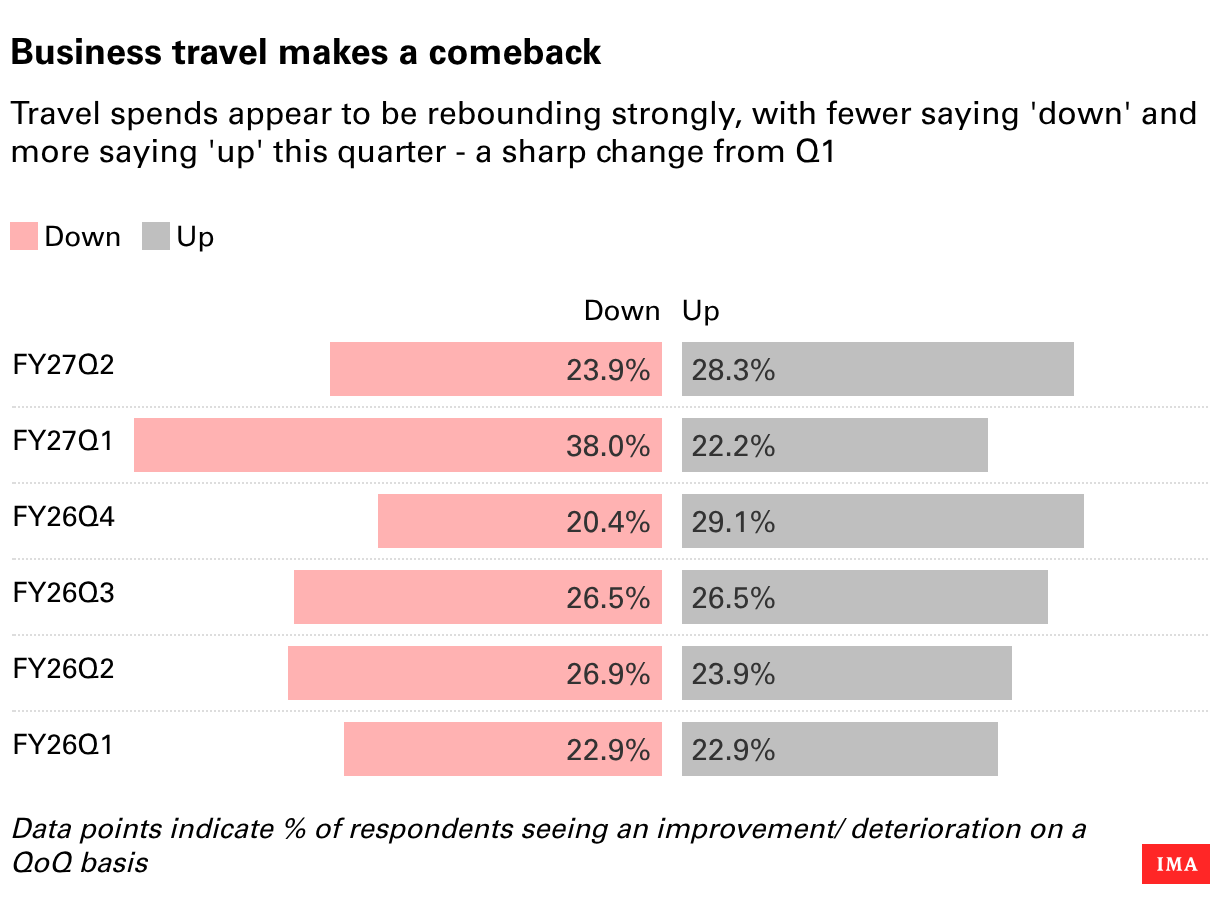
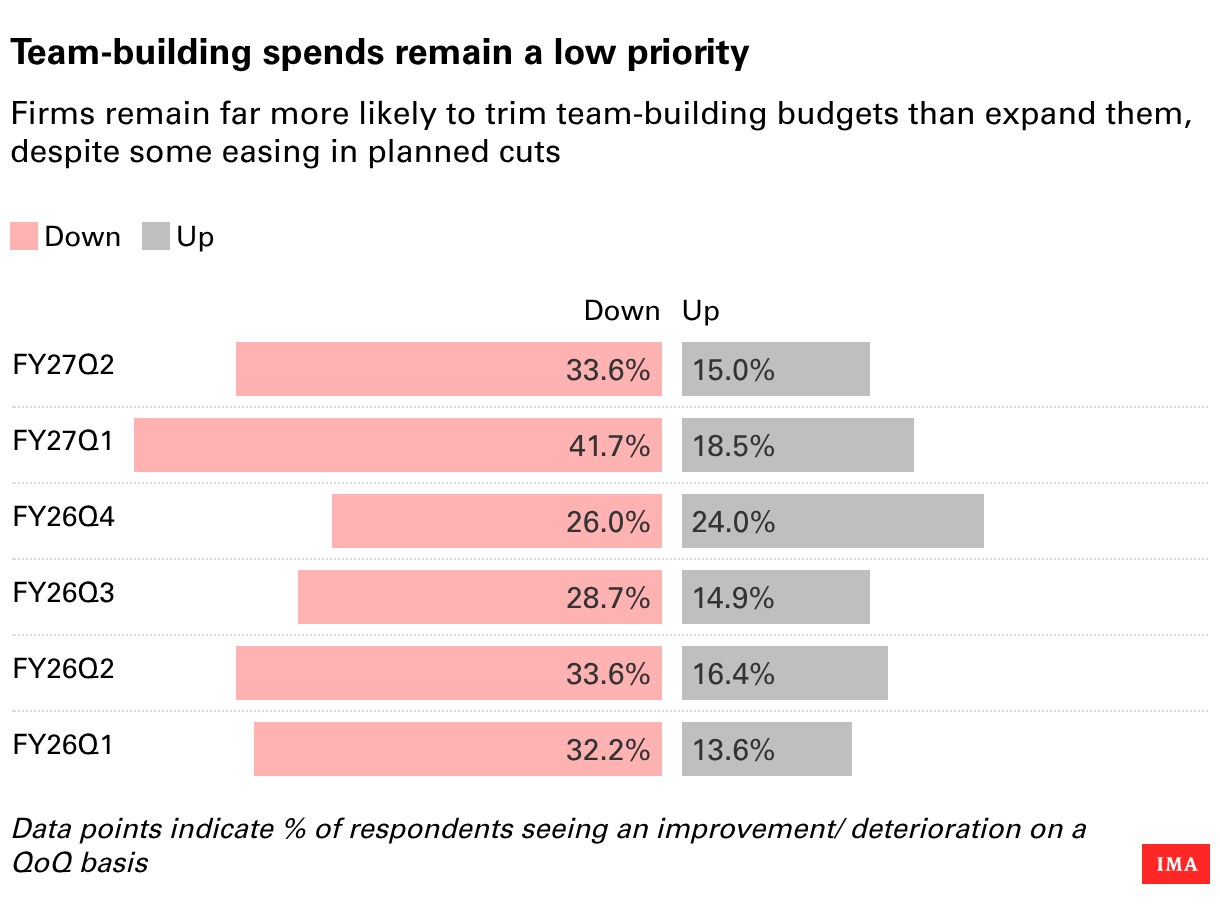
Discretionary spending has turned selective: business-travel spends are rebounding strongly while marketing and team-morale expenses are being curtailed.
The Q2 FY27 BCPI: Strengthening
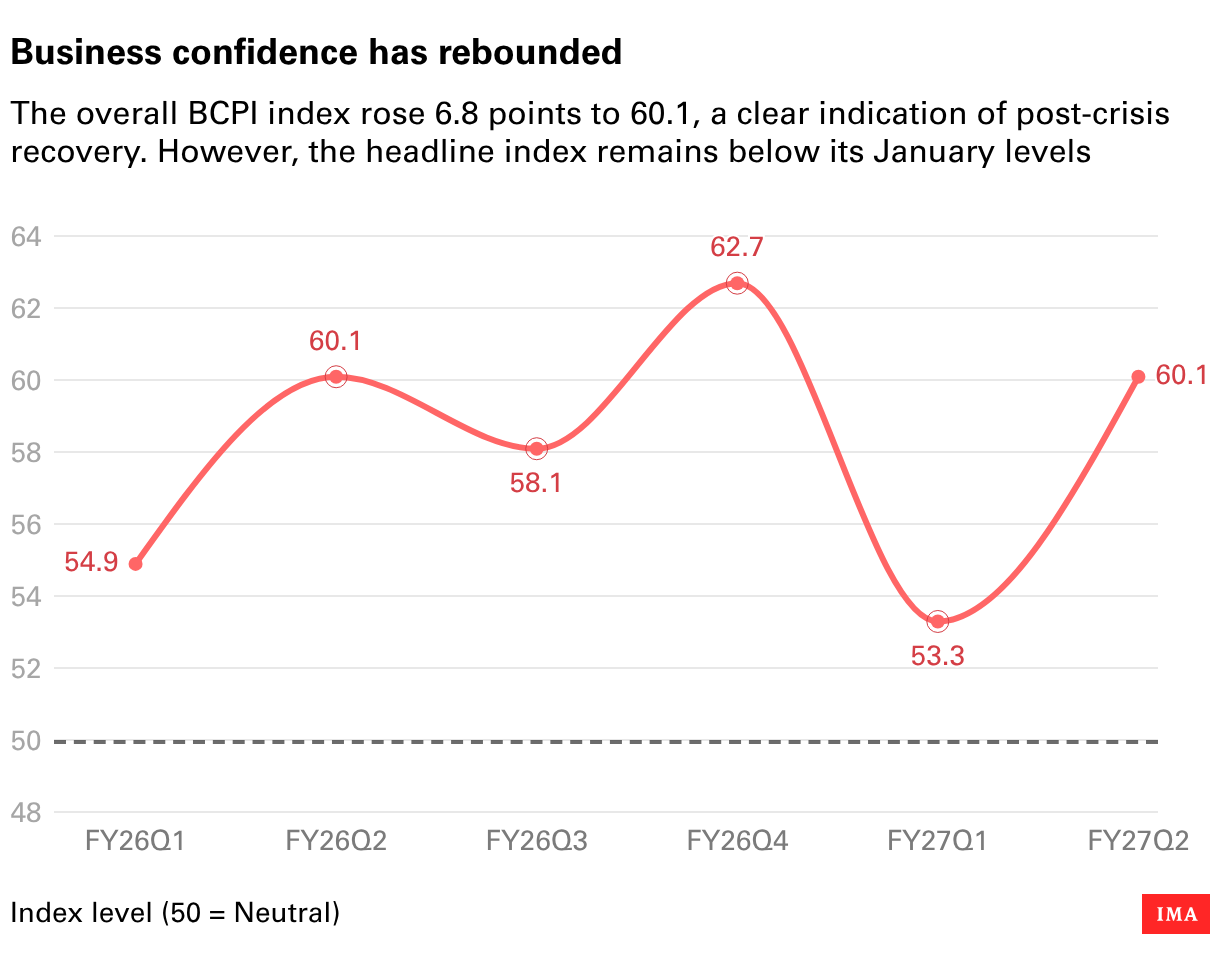
View interactive version: https://datawrapper.dwcdn.net/7XKDQ/3/
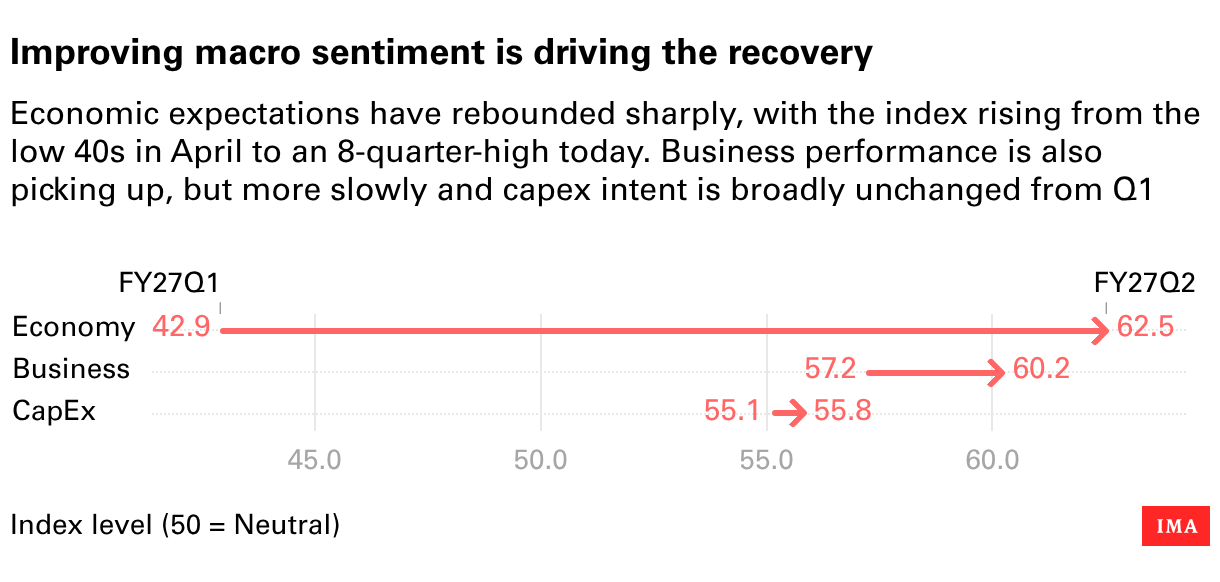
View interactive version: https://datawrapper.dwcdn.net/ukswC/3/
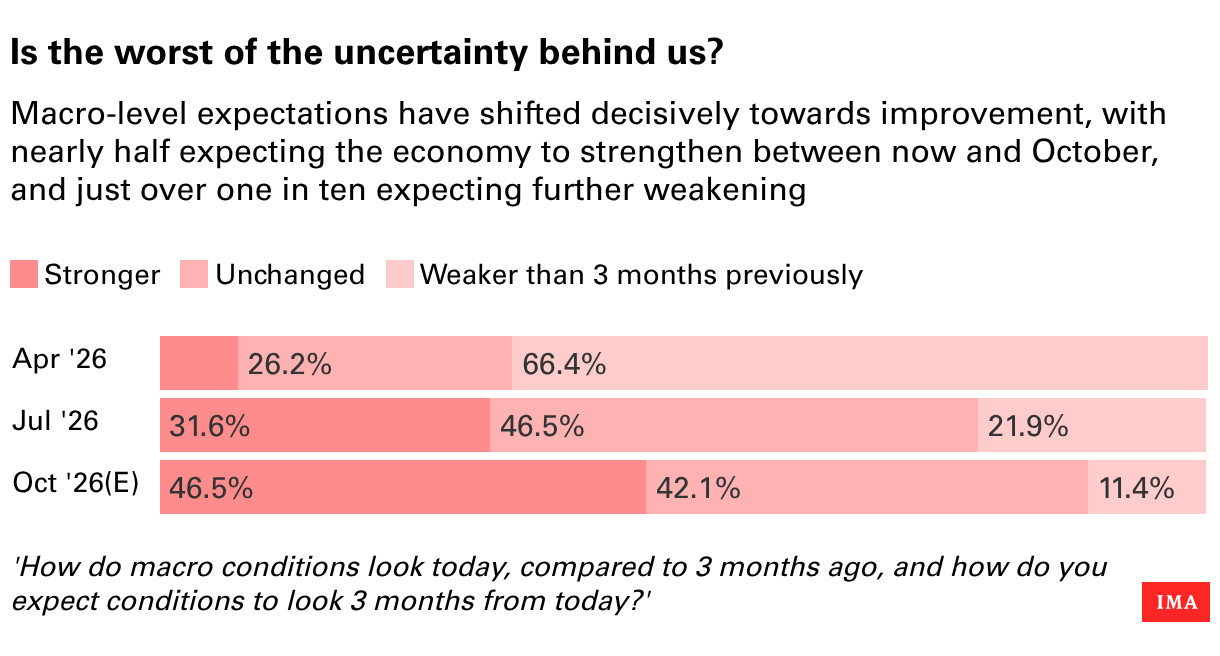
View interactive version: https://datawrapper.dwcdn.net/SyhSP/5/
The Sectoral View: Recovery Has Its Favourites
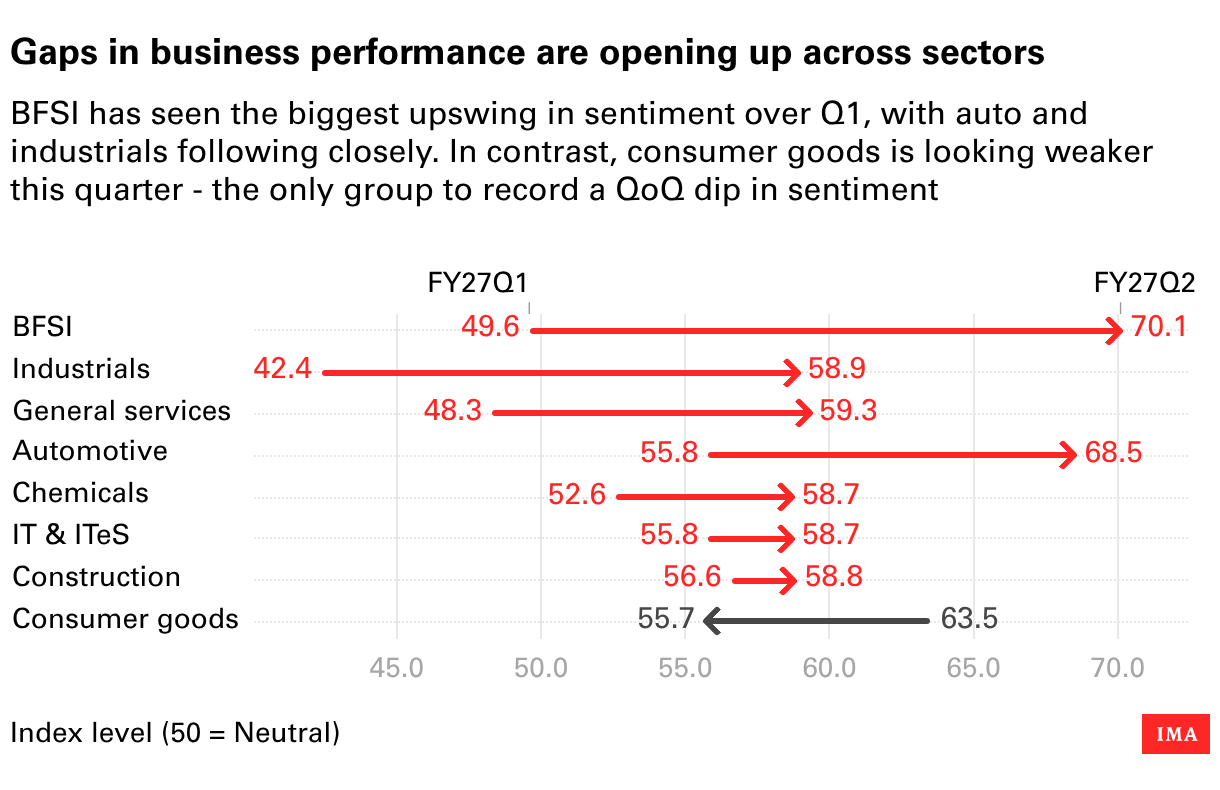
View interactive version: https://datawrapper.dwcdn.net/KDDt9/3/
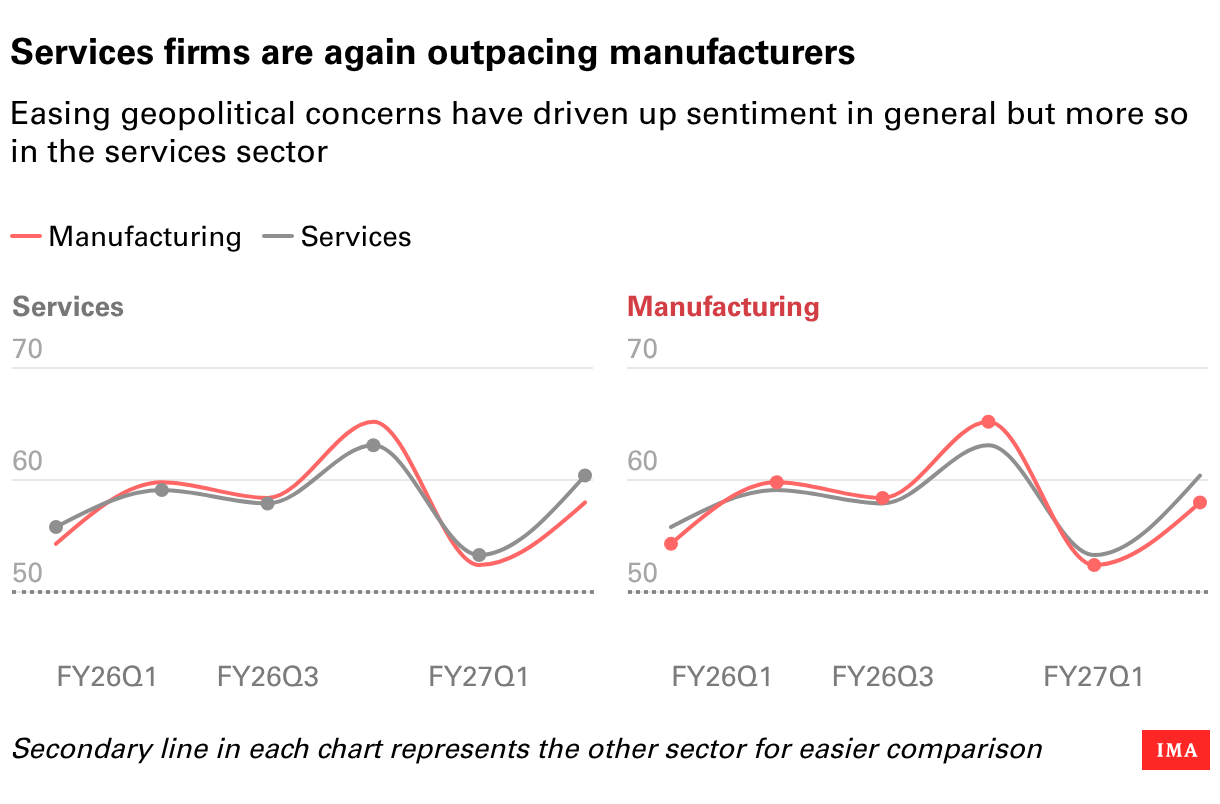
View interactive version: https://datawrapper.dwcdn.net/SDsXX/3/
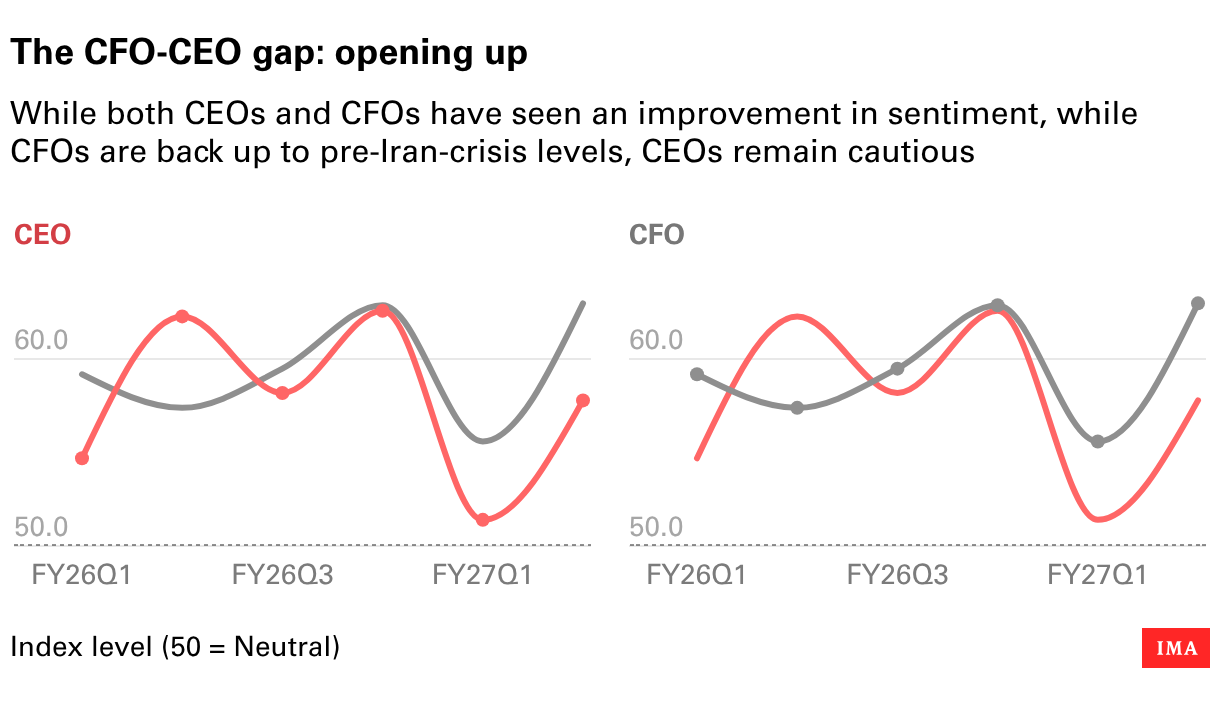
View interactive version: https://datawrapper.dwcdn.net/y3uOQ/4/
Sales and New Orders: Recovering
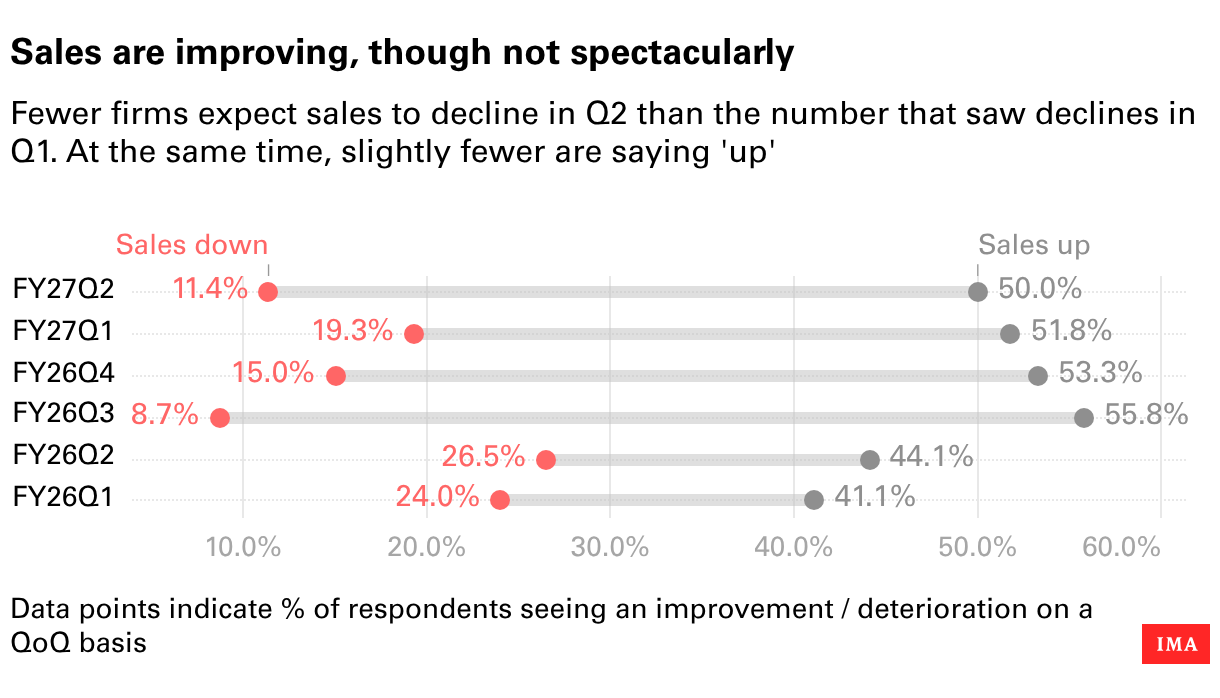
View interactive version: https://datawrapper.dwcdn.net/uukip/3/
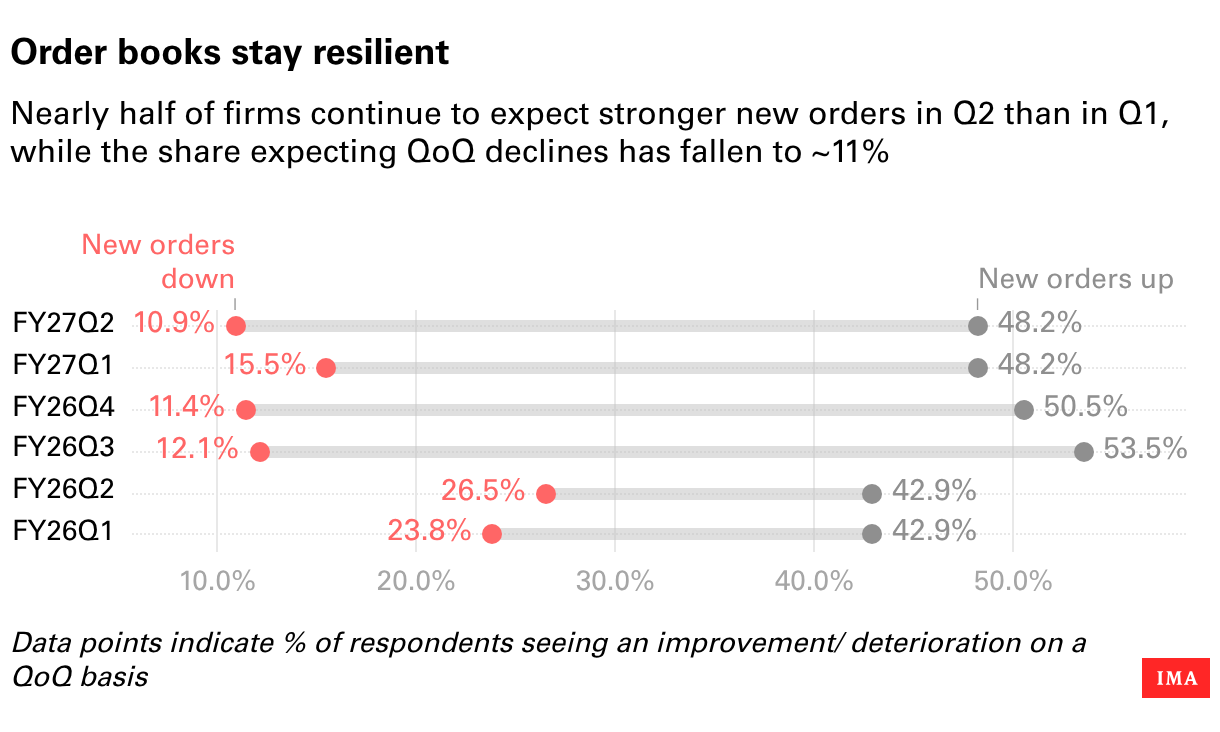
View interactive version: https://datawrapper.dwcdn.net/6GCeh/3/
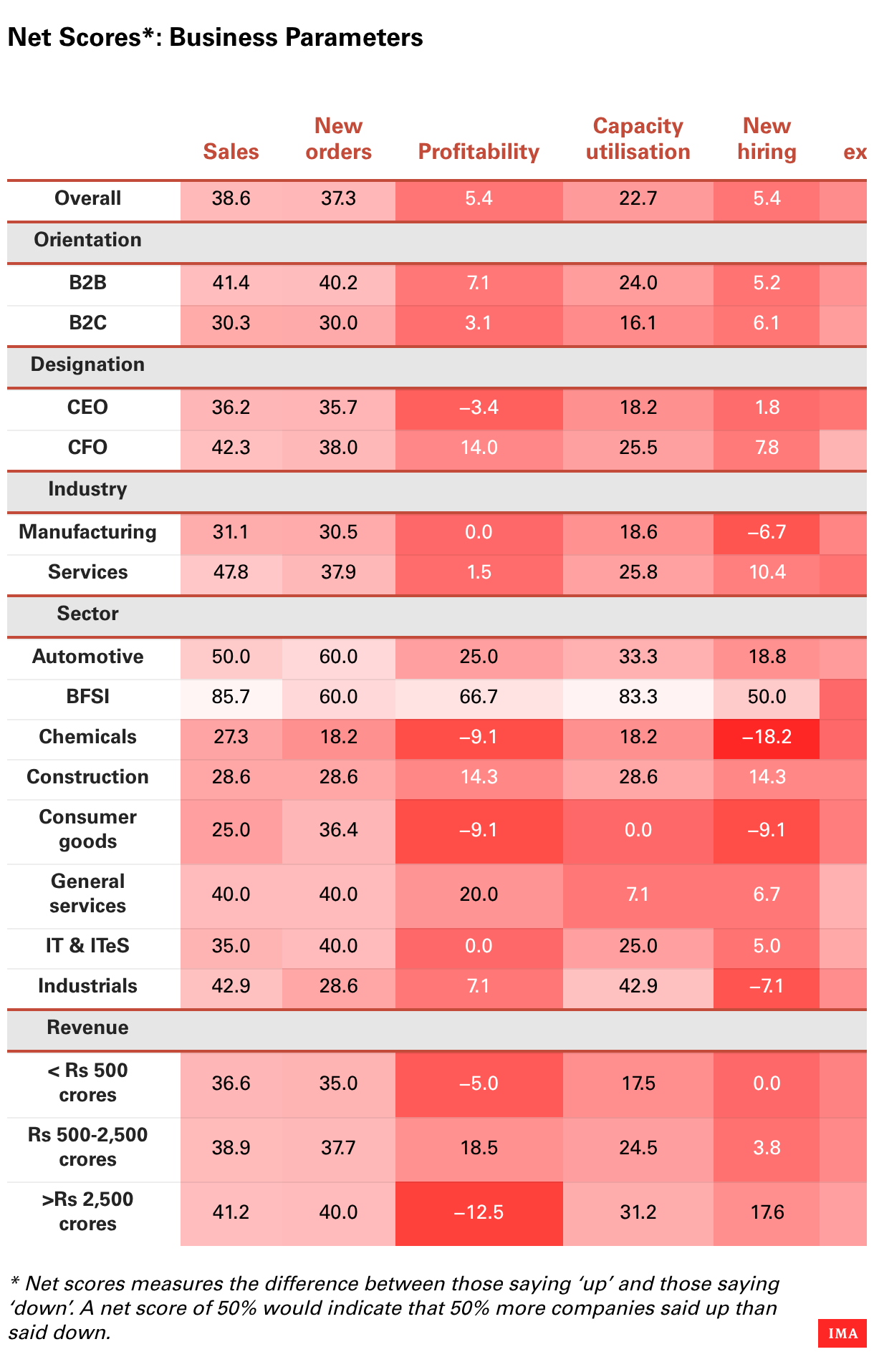
Sales and new order expectations have rebounded in the last 3 months, reversing some of the weakness seen in Q1. The net score* for sales has nearly doubled, to 38.6, while that for new orders increased by ~75%, to 37.3.
This recovery is evident across sectors and companies of different sizes. Manufacturing and services firms have recovered at a broadly similar pace, although the latter continues to report stronger net scores on both indicators. At the sectoral level, BFSI leads on sales (85.7), while automotive and BFSI jointly top new order expectations (60 each), reflecting a marked turnaround from the previous quarter. Chemicals remains the weakest performer on both metrics. As has been the case for a few quarters running, larger firms (> Rs 2,500 crores in revenue) continue to hold stronger expectations for sales and new orders relative to small or mid-sized companies.
*Net scores show the difference between ‘up’ and ‘down’ responses. A score of 50% means 50% more companies reported an increase than a decline.
Profitability: Slowly Improving; Capacity Utilisation: Still Soft
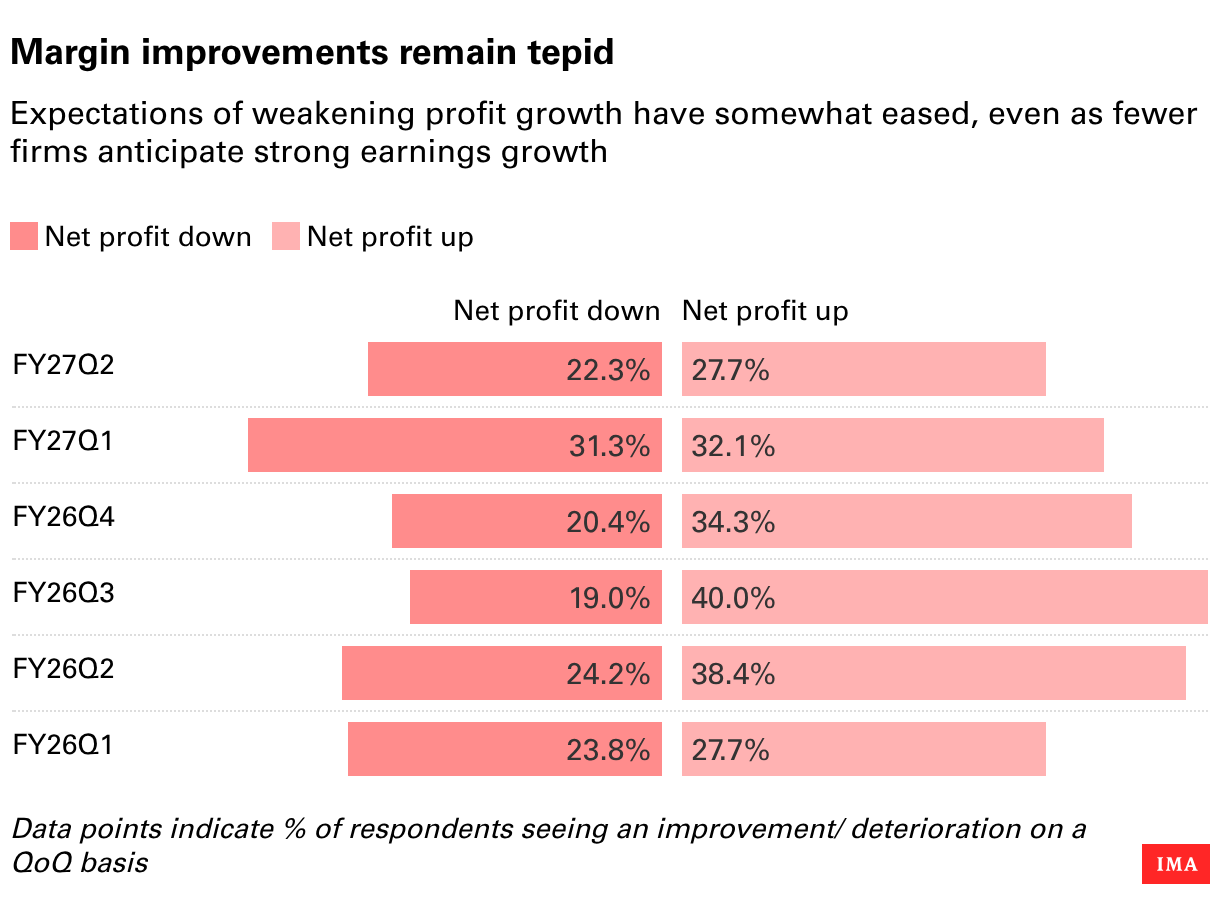
View interactive version: https://datawrapper.dwcdn.net/RqGY6/3/
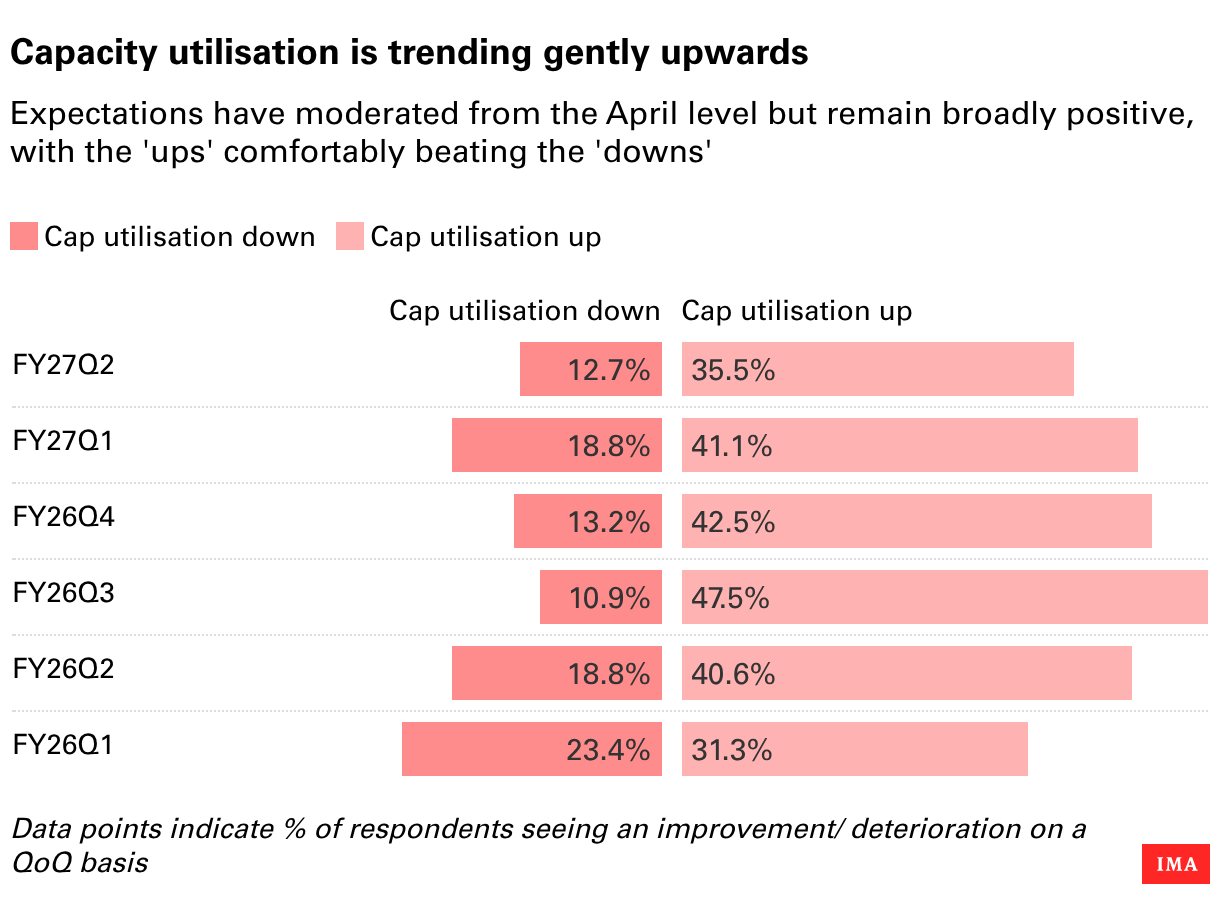
View interactive version: https://datawrapper.dwcdn.net/4KqLg/3/
Expectations around both profitability and capacity utilisation rates have strengthened over the past quarter. While the profitability net score has returned to positive territory at 5.4, capacity utilisation has risen more sharply, suggesting that improving demand is yet to translate fully into stronger margins.
Services firms continue to marginally outperform manufacturers on both indicators. At the sectoral level, BFSI remains the clear (positive) outperformer on both counts. Conversely, chemicals and consumer goods firms continue to remain pressured on margins and are under-utilising capacity, though the general services sectors reports the lowest scores on the latter. Mid-sized firms (Rs 500–2,500 crores) report the strongest profitability outlook, whereas the largest firms (>Rs 2,500 crores) are the most optimistic on capacity utilisation.
New Hiring: Stable; CapEx: Recovering
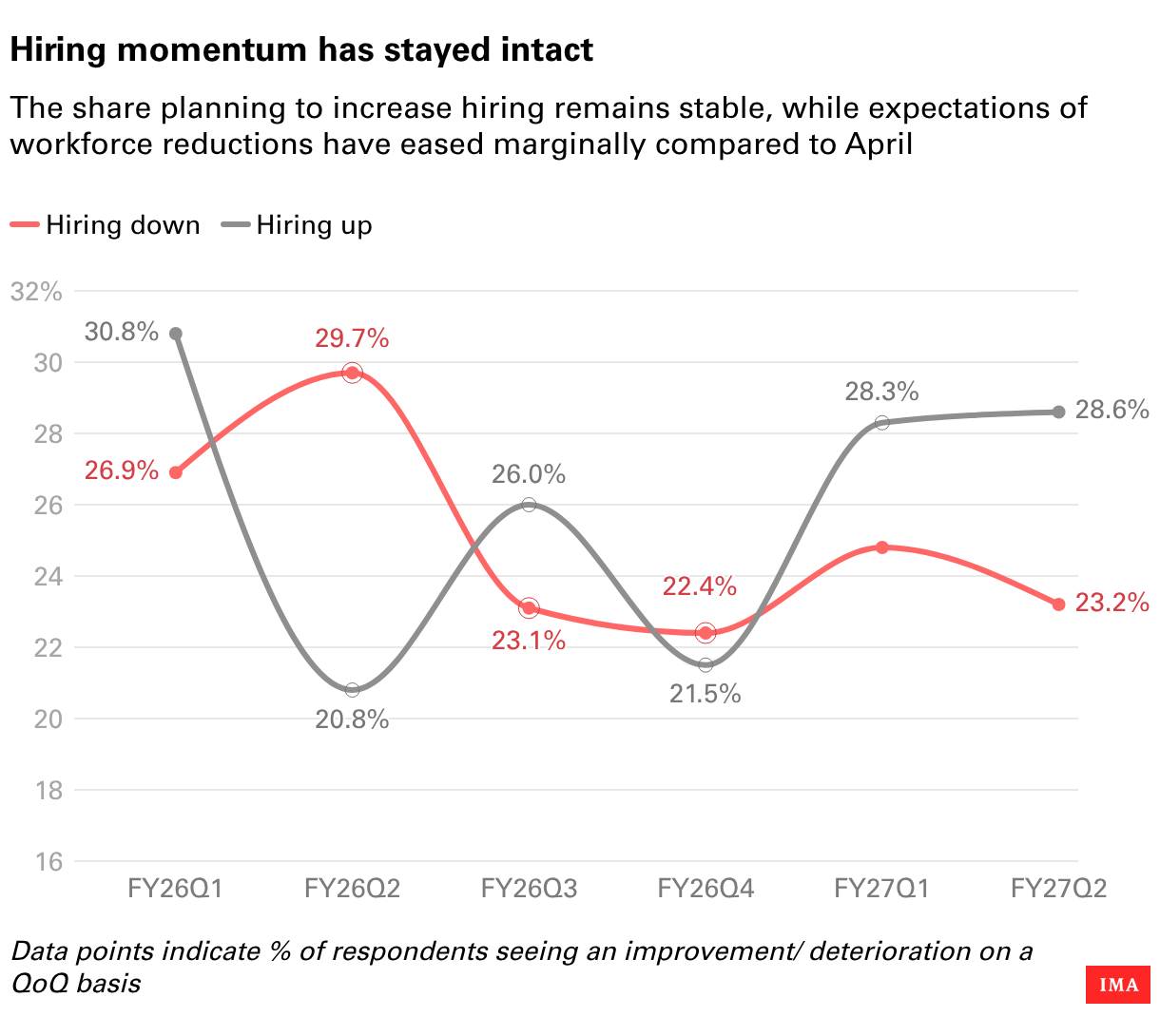
View interactive version: https://datawrapper.dwcdn.net/bt9fp/3/
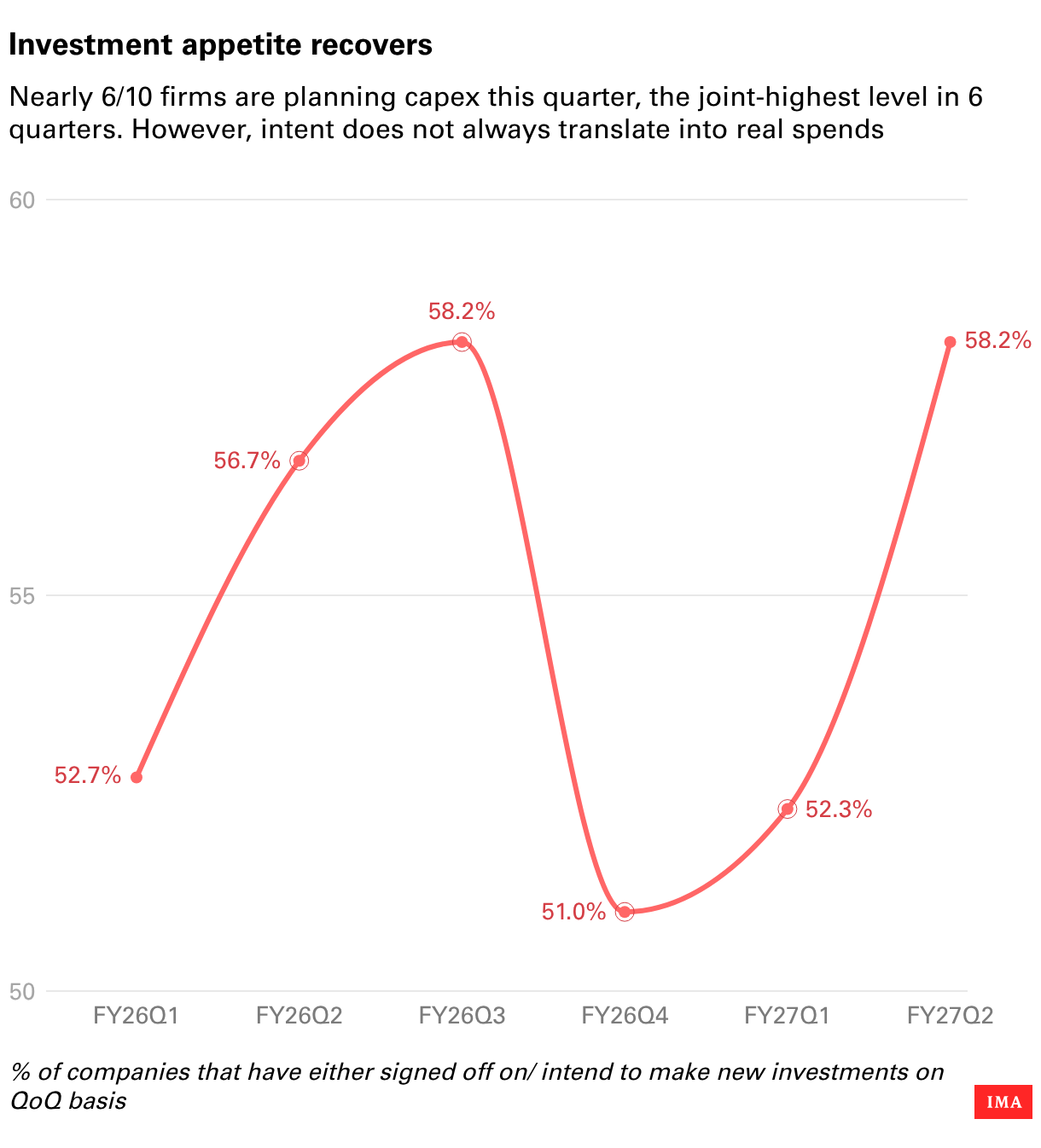
View interactive version: https://datawrapper.dwcdn.net/k4PC1/3/
Hiring intent has improved over the past quarter, while capex expectations have stabilised. Significantly, the net score for hiring has returned to positive territory, reversing the weaknesses seen in Q1. Hiring has improved in both the manufacturing and the services space, but in terms of their net score, manufacturers remain in negative territory (-6.7%, compared to +10.4% among services). At the sectoral level, BFSI (+50%) reports the strongest hiring outlook while chemicals (-18.2%) is the weakest. In terms of company size, hiring expectations have picked up most sharply among the largest (Rs 10,000+ crores in revenue) businesses, climbing to +33%.
In comparison, capex intent remains buoyant, with nearly 6 in 10 firms saying that they plan to put money on the ground. In terms of net scores, manufacturers (+13.2%) are appreciably ahead of services firms (+5.1%). Size-wise, as with hiring, it is the largest companies that continue to report the strongest capex plans.
Soft Spends: A Mixed Bag
View interactive version: https://datawrapper.dwcdn.net/DECoH/3/
View interactive version: https://datawrapper.dwcdn.net/fBHgy/3/
View interactive version: https://datawrapper.dwcdn.net/zUaRi/3/
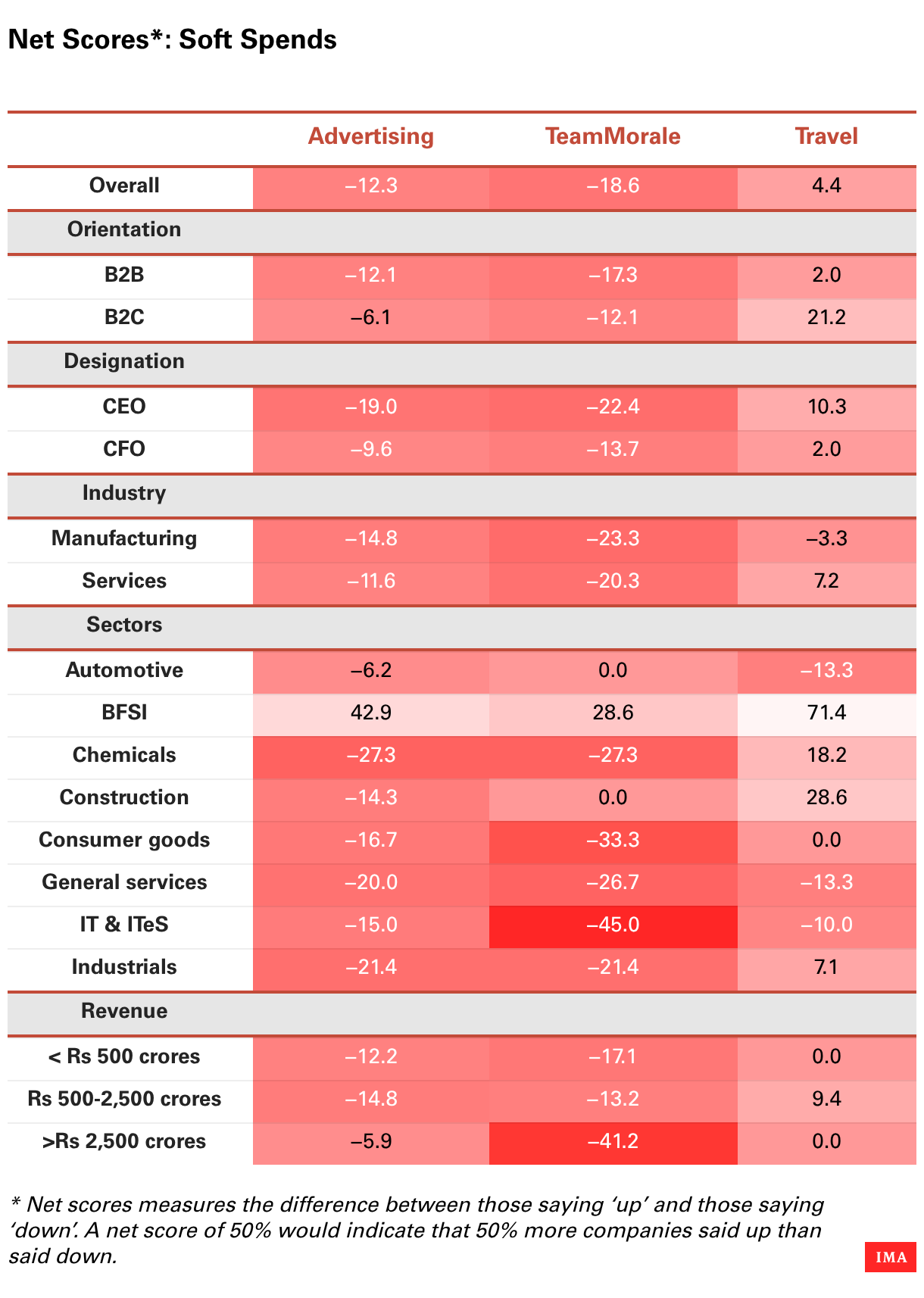
Discretionary spending has become more selective over the past quarter. While marketing sentiment has weakened further and team-morale spending remains subdued (though better than 3 months ago), travel allocations have rebounded, signalling a renewed willingness to support this business-critical activity. At the sectoral level, BFSI stands out, reporting an uptick in marketing, team-morale initiatives and travel spends. In contrast, other sectors have pulled back on marketing expenses, a change from last quarter, when consumer goods and IT/ITeS were quite buoyant on this score.
FY27 economic and business outlook
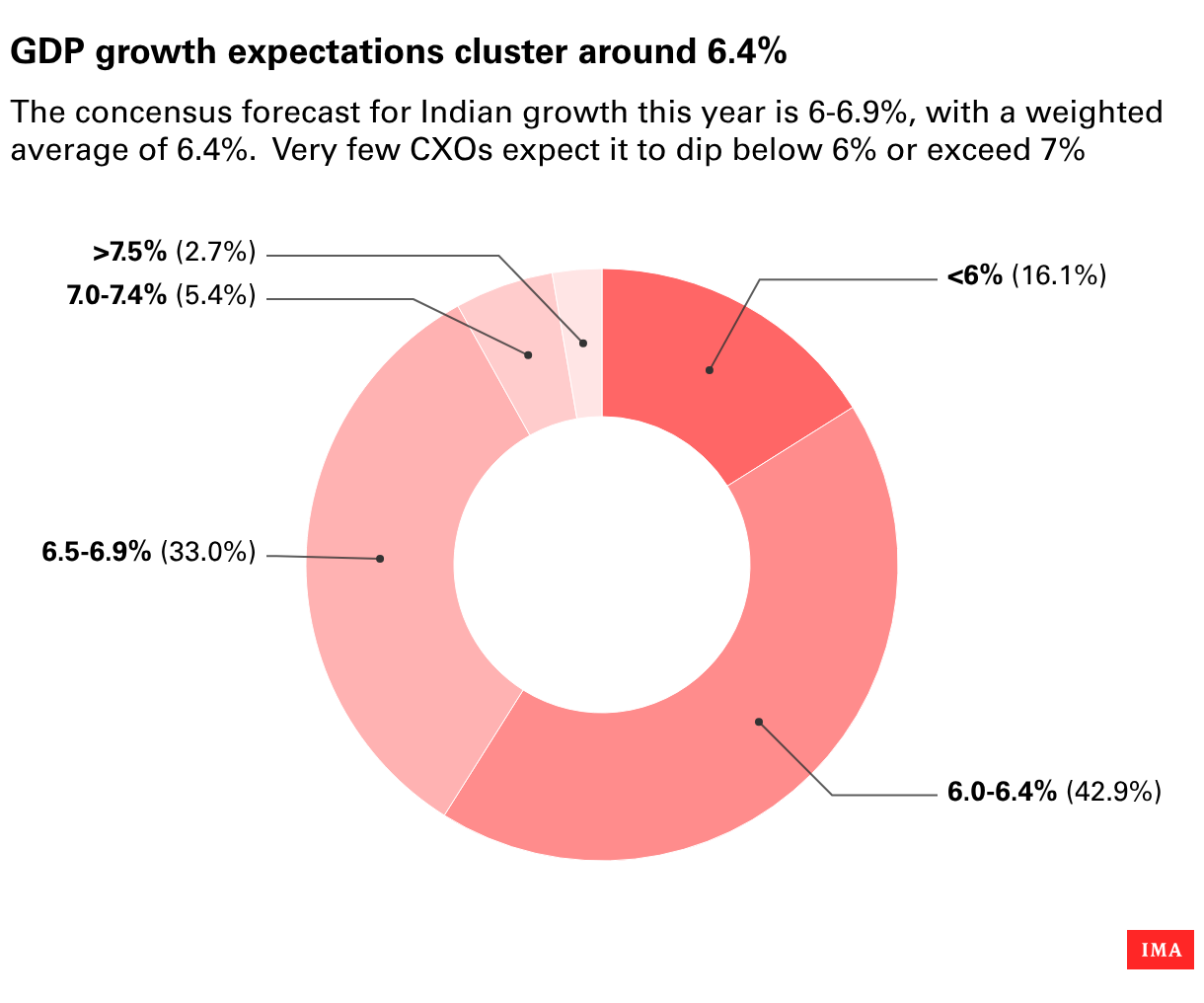
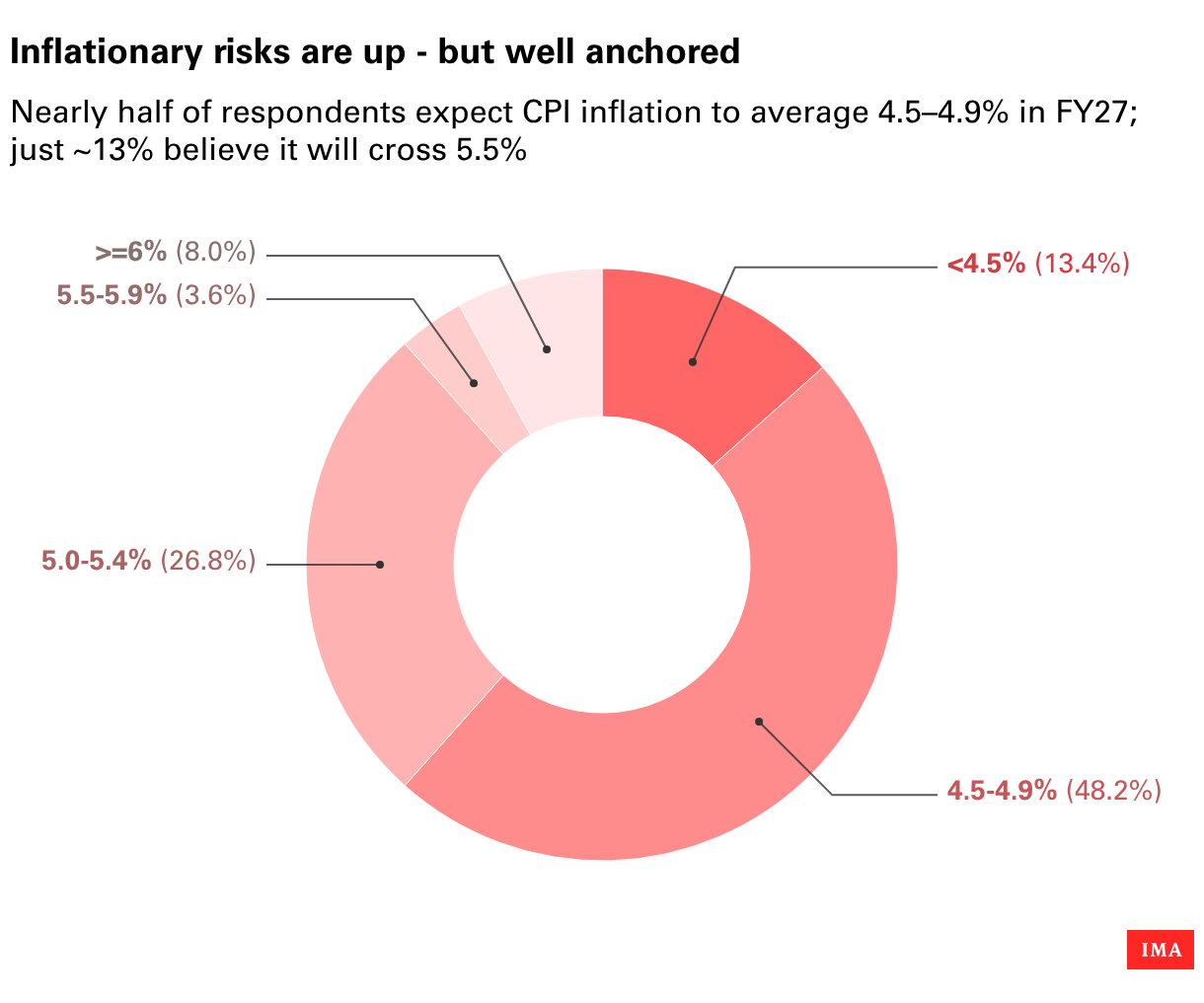
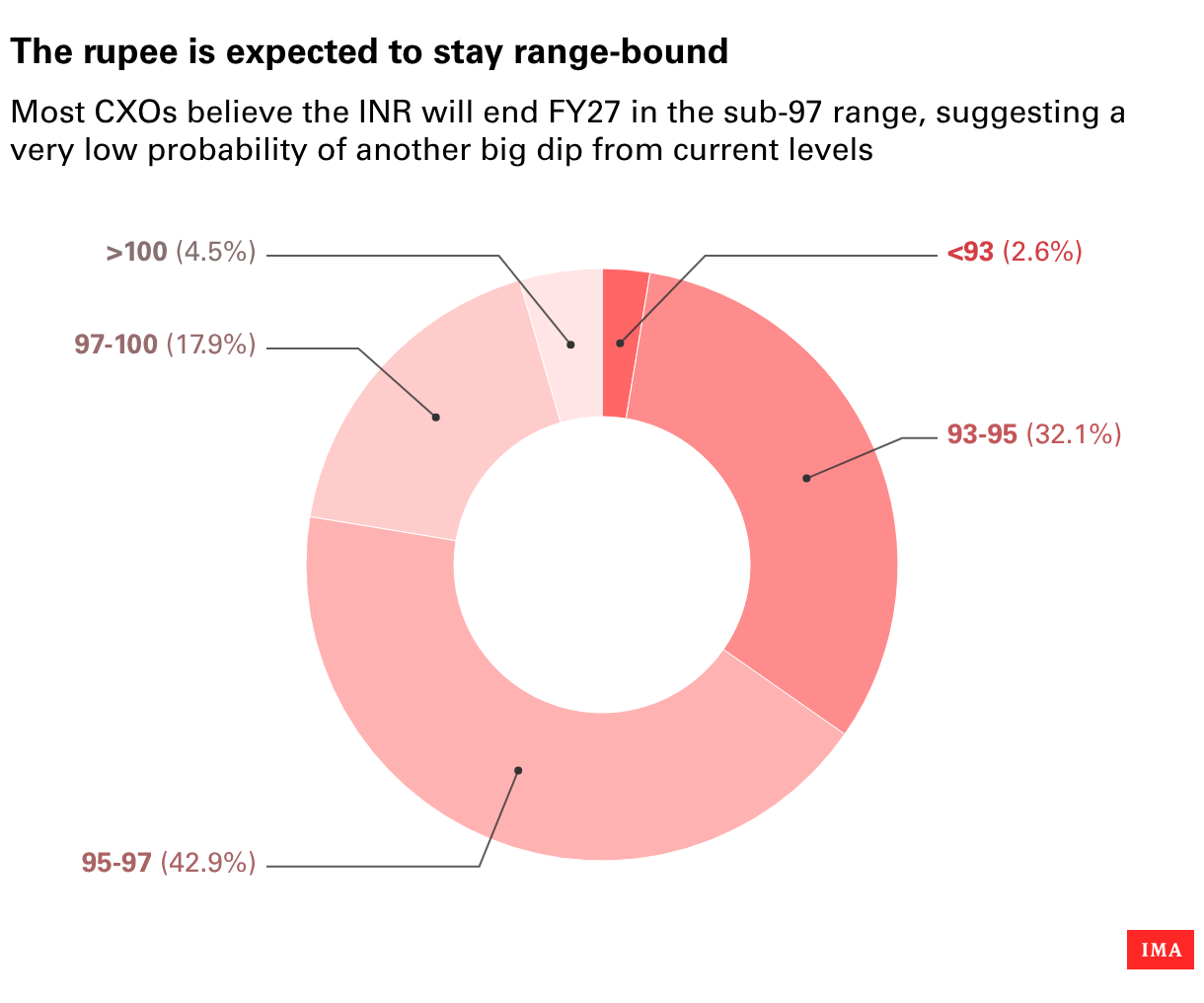
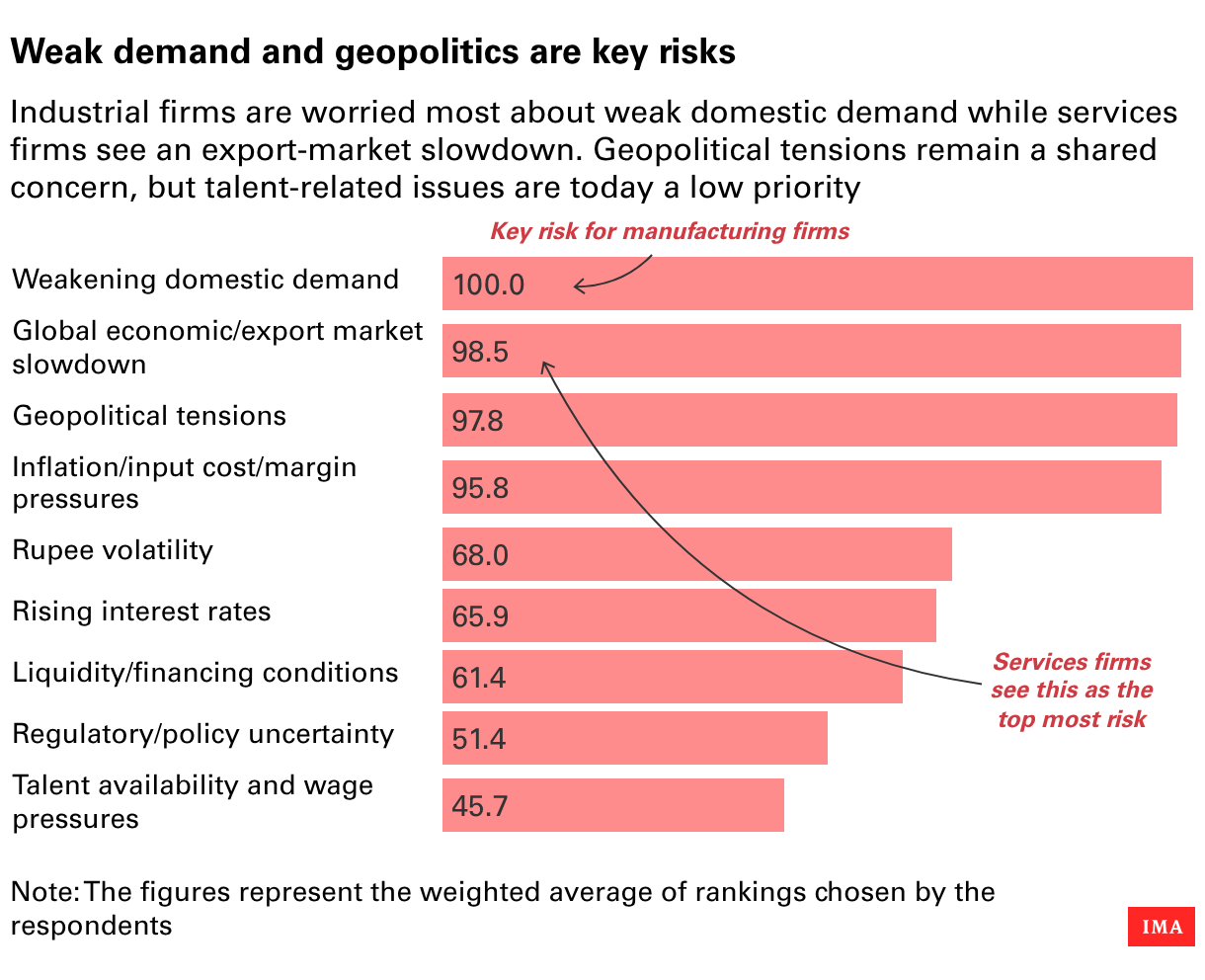
To complement the BCPI findings, we asked our respondents about their expectations for the macroeconomic environment and the key risks likely to shape business performance over the coming year. Overall, firms remain cautiously optimistic, expecting moderate GDP growth (averaging 6.4%), well-contained inflation (<5%) and a broadly stable (95-97/$ by March 2027) rupee. The principle risks they identified were weakening domestic demand (especially among manufacturers), slowing global markets (which is weighing more on services firms) and geopolitical tensions.
View interactive version: https://datawrapper.dwcdn.net/70vza/3/
View interactive version: https://datawrapper.dwcdn.net/S1Ms0/3/
View interactive version: https://datawrapper.dwcdn.net/BsE7I/2/
View interactive version: https://datawrapper.dwcdn.net/MUqVg/4/
Annexure 1: Headline Results
View interactive version: https://datawrapper.dwcdn.net/J3y6d/4/
View interactive version: https://datawrapper.dwcdn.net/WeFVi/3/
View interactive version: https://datawrapper.dwcdn.net/89vV2/3/
Annexure 2 – Business Performance – Net Scores
View interactive version: https://datawrapper.dwcdn.net/vnjXl/2/
View interactive version: https://datawrapper.dwcdn.net/JUItO/2/