


Trade Breakthroughs and Steady Growth
February delivers major trade diplomacy wins while domestic indicators remain robust
Political & Policy Issues to Watch
Two major trade deals got done, and India hosted key world leaders
In rapid succession, India finalised a comprehensive, 20-years-in-the-making FTA with the EU and (less expectedly) a trade deal with America that ended months of uncertainty and rancour. Given its comprehensive nature (covering ~99% of India’s exports by value), the FTA will be game-changing, more closely aligning Indian and European supply chains, improving labour mobility and strengthening cooperation on financial services. Details of the US pact are awaited but the deal is likely to prove mostly tactical, removing the risk overhang on the rupee, exports, inbound FDI and Indian financial markets. By requiring only minimal concessions from India, it also restores confidence in India’s ability to drive a hard bargain. Importantly, neither deal cedes ground on agriculture, improving their domestic ‘saleability’ and handing the Modi government some precious political capital. This will matter greatly, given that several key states – Assam, West Bengal, Kerala, Puducherry and Tamil Nadu – go to the polls in the next 3 months. Successful state visits by Germany’s Chancellor and the President of the UAE rounded out a month of intense diplomacy.
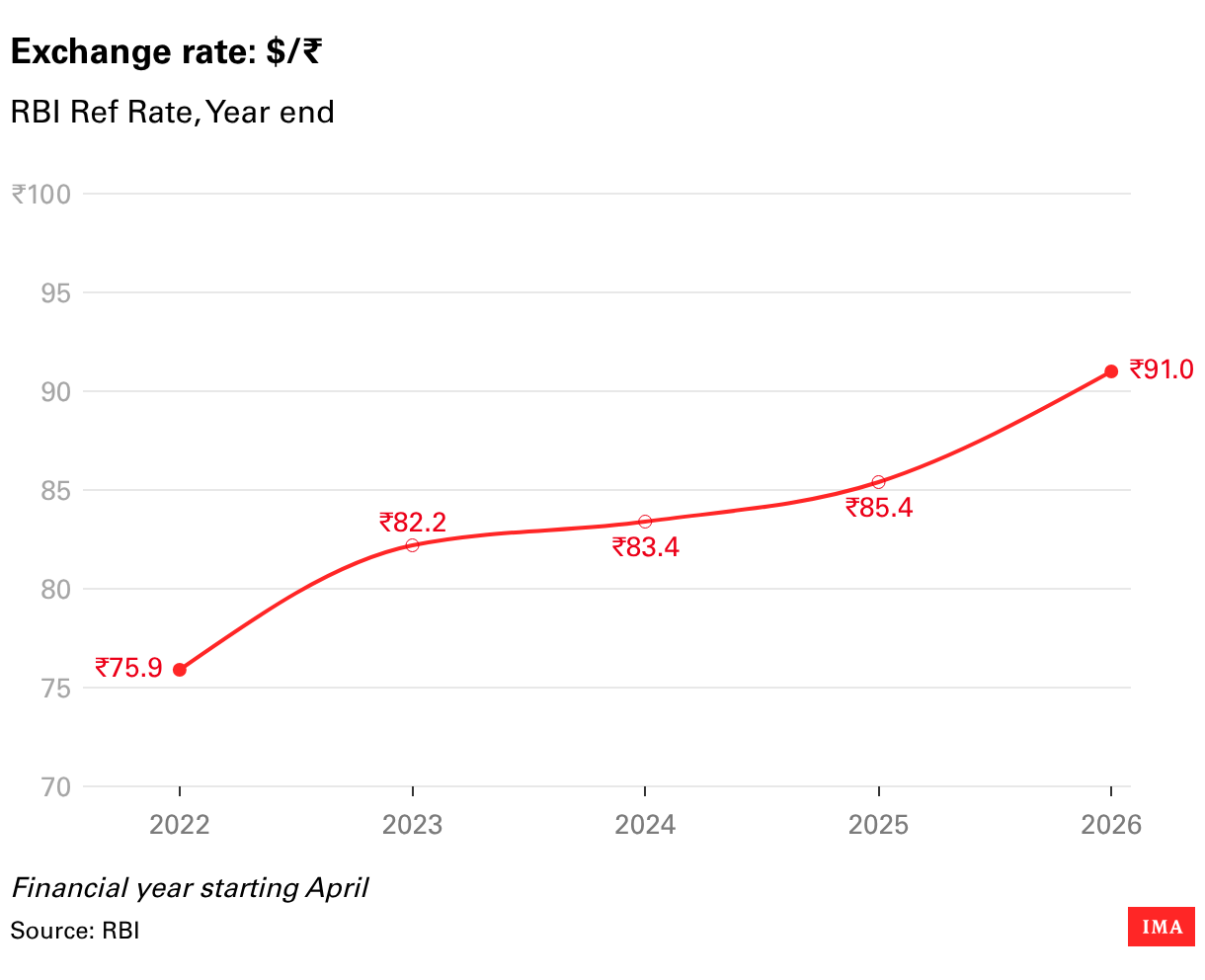
View interactive version: https://datawrapper.dwcdn.net/O0ORB/1/
The Budget improves India’s customs regime and offers support to several industries
Though it initially disappointed the markets, the 2026 Union Budget keeps India on a gentle glide path towards fiscal consolidation, pegging the FY26 and FY27 deficits at 4.4% and 4.3% of GDP, respectively. Crucially, it maintains strong government commitment to infrastructure spending, with a ~10% YoY increase. It also contains useful incentives for data centres, pharmaceutical and electronics manufacturers, education, tourism, healthcare, and the semiconductor, carbon capture and rareearth industries. Several key below-the-radar tweaks to India’s customs regulations will also prove important to boosting trade flows in the medium term.
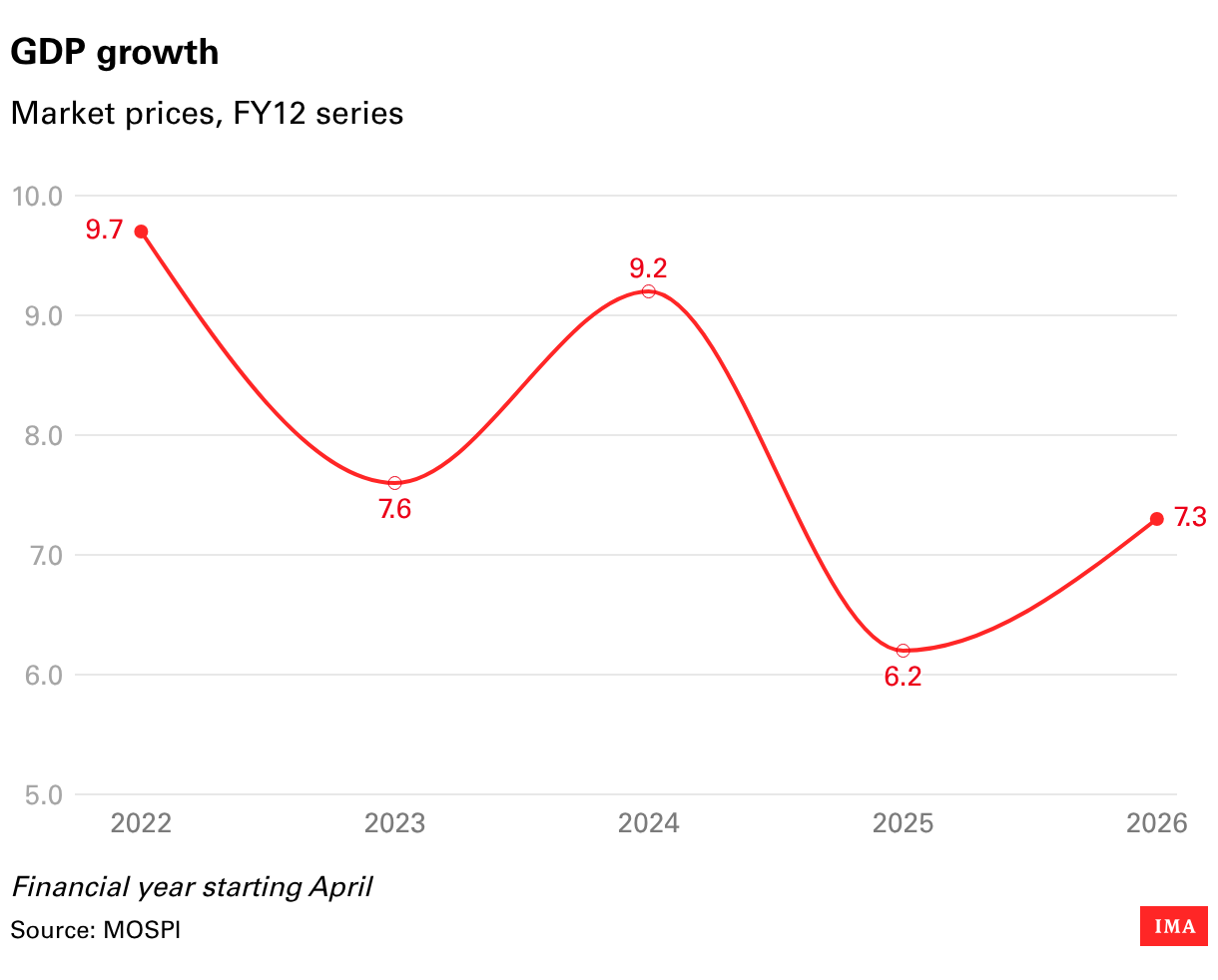
View interactive version: https://datawrapper.dwcdn.net/IQh5T/1/
Outlook for the Market
Lead indicators continue to indicate robust growth
The economy remains in fine fettle, with the main lead indicators looking up. The Manufacturing and Services PMIs edged up by 40 and 50 bps respectively in January, to 55.4 and 59.5, fuelled by firm domestic demand. GST receipts remained buoyant at Rs 1.93 trillion in January (up 6.2% YoY and 7.9% cumulatively over Apr-Jan); e-Way bill issuances were up 21% cumulatively through December. Auto sales continued to power ahead in January, with cars at ~10%, 2-wheelers at ~20% and CVs at 15-40% across segments. Merchandise exports grew by a modest 1.9% in December, tempering November's 19% surge but imports rose by 8.8%, up from (-)2% the previous month, while the cumulative Apr-Dec trade deficit swelled to $248 bn. On the agricultural front, the total area sown under the winter crop was up by a healthy 2.8%, but projections of above-average temperatures in Feb-Mar may impact output.
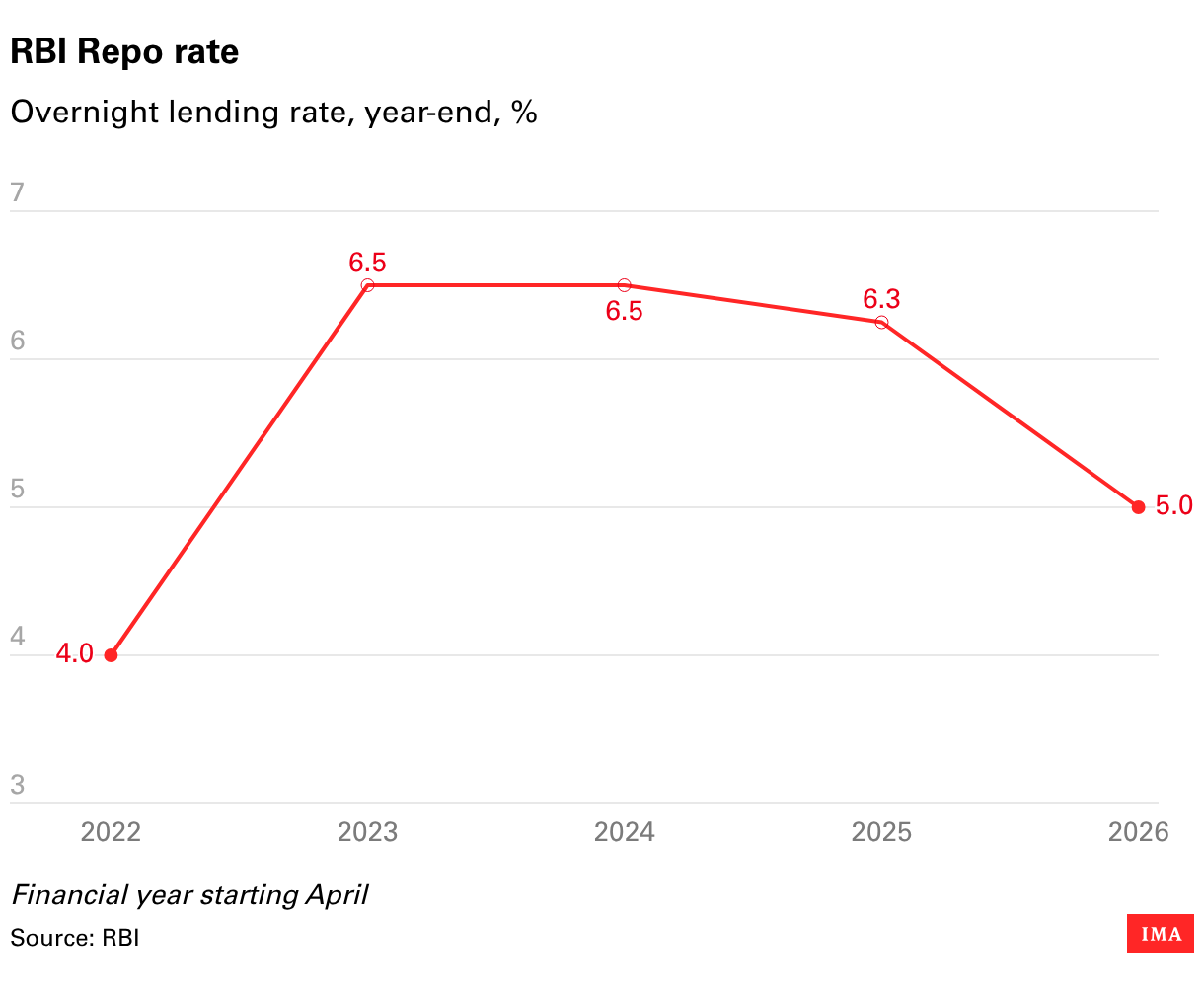
View interactive version: https://datawrapper.dwcdn.net/u2ZRU/1/
Inflation is up but the rupee is finding ground
CPI inflation continued to edge up, to 1.3% in December, from 0.7% the previous month, while staying well within the RBI's comfort zone. Finally, with a US trade deal secured, FIIs shifted course, buying $1.3 bn of Indian assets in early February, reversing December’s $ 3.2 bn in outflows and steadying the rupee.
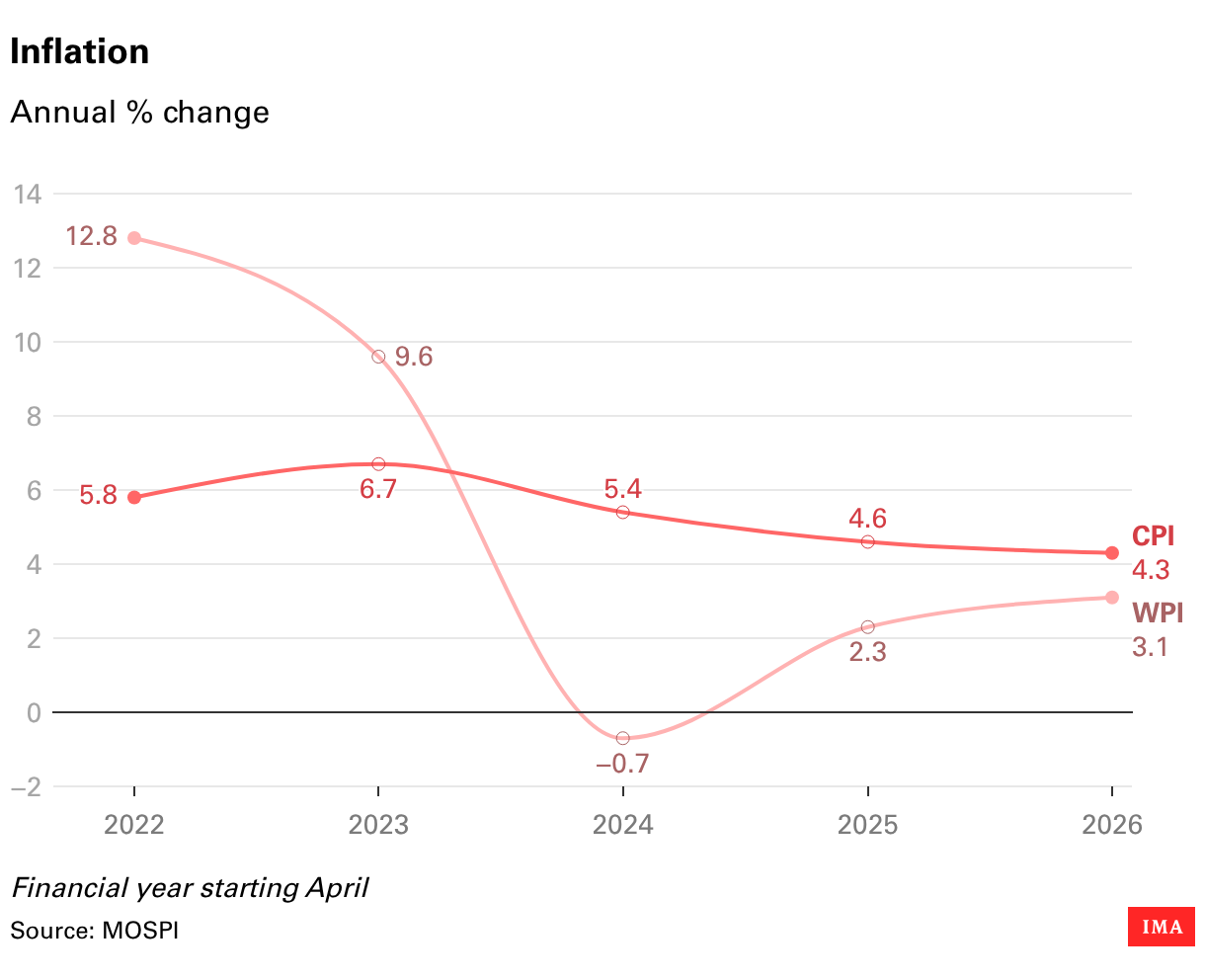
View interactive version: https://datawrapper.dwcdn.net/3qlxP/1/