
Building for the Next Chapter
How Safex is Balancing Ambition with Discipline
Growth creates difficult choices for finance leaders. A new product or acquisition may promise strong returns, but how much cash will it absorb? How long will it take to pay back? And will it still make sense five years from now? For CFOs, such questions sit alongside the everyday demands of funding the business and keeping costs in check.
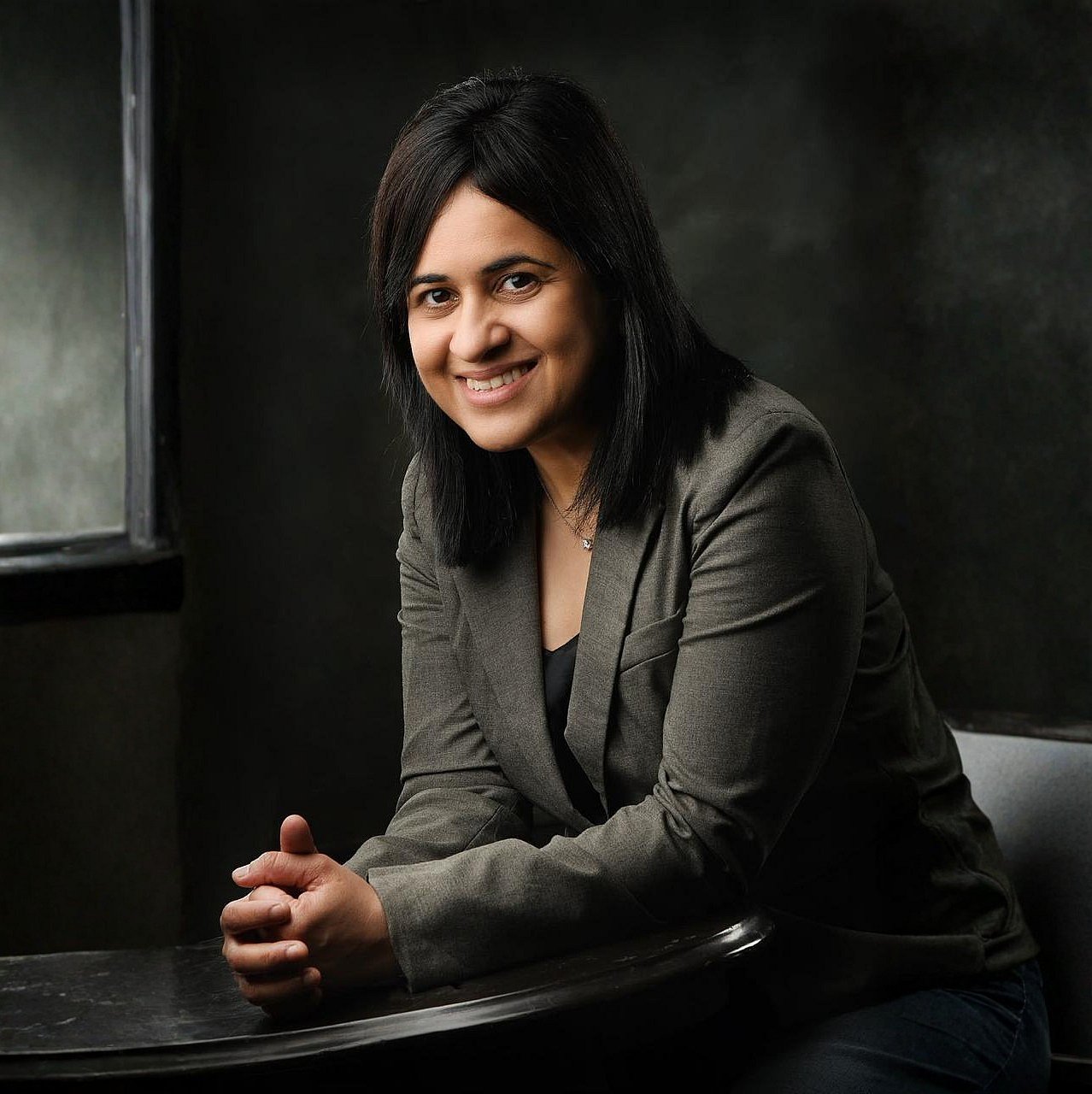
Founded in 1991, Safex Chemicals began as a branded agrochemical business. Today, the business operates through three brands: Safex, Indo and Smith. The group expanded into speciality chemicals with its acquisition of Shogun Organics in 2021, which now produces about a third of the active ingredients required by the branded business and is the innovator of Renofluthrin, a molecule helping India tackle the menace of mosquitoes more effectively and sustainably. A UK acquisition in 2022 added CDMO capabilities to its portfolio. Looking ahead, Safex is focused on growing these businesses and making fuller use of its existing capabilities. In this conversation, Richa Malhotra, the company’s Group CFO, discusses how finance is supporting that growth through capital allocation, risk management, cost optimisation and preparation for public markets.
What are your priorities as CFO as Safex enters its next phase of growth?
Safex has been on a high-growth trajectory for several years and, over that period, has diversified significantly. Each expansion, however, remains closely connected to our expertise in the chemical space. The branded agrochemical business has been, and continues to be, the backbone of the company. A few years back, we added speciality chemicals, followed more recently by the CDMO vertical. We expect to close the current financial year with turnover of around ₹20 bn ($207 mn) and EBITDA of close to ₹4 bn ($41 mn).
One of my key priorities is ensuring the availability of capital. Each of our businesses is growing and needs funding. Making capital available in the right quantum, at the right price and at the right time is a continuous priority. There are several avenues for meeting short- and long-term requirements, and we continually look for ways to improve the efficiency of our funding arrangements. The next priority is capital allocation, which requires judgement, a clear strategy and well-defined KPIs. We believe in the principle that what gets measured gets managed. Setting the right benchmarks, measuring performance against those benchmarks regularly and making necessary course corrections helps ensure that capital allocation remains objective and understood across the organisation.
Yet another priority is risk management and governance. As we grow, we need to continually revisit our policies and processes. Safex used to be a purely domestic business; today, we have international operations and cross-border transactions. What worked well when we were smaller may need to be revisited as the business becomes more complex. It is therefore important to step back periodically and ask whether our systems, controls and culture are keeping pace with the business.
Risk is not just about currencies, interest rates and commodities. It includes counterparty credit, operational and regulatory risk. In our branded agrochemical business, for example, we deal directly with more than 18,000 dealers. Understanding their contribution, payment behaviour and collection cycle is an important part of managing that exposure. Many risks can be hedged, insured or operationally mitigated, while some we may decide to live with. At any point, however, knowing what risks the business carries is crucial.
The most engaging part of the role for me is working closely with the business on strategy. The management team at Safex is front-footed, growth-focused and open to new ideas, and finance plays a pivotal role in shaping and evaluating those ideas. We provide the insights and intelligence needed to assess the competitive landscape, cash generation and working-capital implications, while also testing how each opportunity fits into the company's longer-term strategy. Something that looks attractive over the first two years may look very different over the next five. There is access to so much information today; using it meaningfully can significantly aid the decision making process.
The ethos of Safex is captured in the four Ts: Transparency, Trust, Teamwork and Training. These are not just words; they reflect in how we make decisions, work with one another, build capabilities and hold ourselves accountable.
Several of your businesses are competing for investment. How do you decide which gets capital, how much, and which opportunities not to pursue, without losing financial discipline?
Capital allocation requires financial discipline and clearly defined KPIs. Financial discipline is not a deterrent to growth; in fact, when understood well, it supports growth. That holds whether the proposal is an acquisition, new capex, a new product line or entry into a new geography. Many opportunities may look exciting when viewed only through the returns or EBITDA they promise, but one must go deeper. How much will we spend to build the capability, and is it an enhancement of existing capacity or a completely new vertical? If it requires investment in capex, what does the fixed-asset turnover ratio tell us, and when will the investment pay back? If it is a new product, who are the competitors, what is the total addressable market, what cash-flow cycle can we expect, and how working-capital intensive will it be? Is it synergistic with what we already do, or is it unrelated? The objective is to build a well-disciplined balance sheet while continuing to invest for growth. For significant, long-term decisions, we believe in setting a clear benchmark at the outset, measuring achievement against it regularly and making adjustments when needed, without an emotive lens or attachment to the original decision. Business teams think through these questions, of course, but the finance & strategy team can be a sounding board and bring a perspective that may otherwise not have been considered or may get lost in euphoria. Once the KPIs go beyond the headline numbers, the decision becomes far more objective.
Financial discipline is also about cost optimisation. When a company is growing rapidly, it is easy to lose sight of growth in costs. Ideally, revenue growth should translate into operating leverage. If EBITDA margins remain flat despite strong revenue growth, that is a signal to examine where cost inefficiencies may be creeping in. We analyse costs closely, plan ahead and flag anomalies and deviations from trends.
How do you see the new categories fitting into your long-term strategy? What are your growth enablers?
Our branded agrochemical business has grown for 17 straight years without a year of decline, despite operating in a sector vulnerable to uncontrollable factors such as the monsoon. That would give you an idea about the strength of our distribution and customer relationships. While the branded business remains an important vertical which continues to grow year after year, we are moving up the value chain by diversifying into speciality chemicals and building on our own expertise. Our speciality chemicals arm, Shogun, provides about a third of the active ingredients needed by the branded agrochemcial business, bringing cost efficiency and security of supply through backward integration. Our patented molecule Renofluthrin has set a new benchmark in the household insecticide space. Then there is the CDMO vertical, an acquisition we made in the UK in 2022, which faced issues in its first few years due to the global inventory destocking cycle. This year, however, the CDMO business has turned the corner and will be delivering positive cash flows.
The next step is not only to expand geographically; it may well be to deepen our presence in the markets where we already operate. In the branded agrochemcial business, we are a strong player in the North and East, but there are significant areas we are yet to make meaningful inroads, including southern India. We also add multiple new products every year, increasingly those that deliver greater value to farmers. In speciality chemicals, we have only just started. Our strategy is to add molecules, expand internationally and, over time, supply agrochemical active ingredients to external customers as well. In CDMO, we have the capacity and capability to take on more clients and products in the short to medium term.
The businesses also complement each other financially. Branded agrochemical business typically has a longer cycle, with the first and second quarters requiring greater working capital. Speciality chemicals have a more consistent requirement through much of the year, while CDMO has a much shorter working-capital cycle. Put together, the three businesses create a balanced working-capital profile in terms of quantum, timing and duration. That complementarity is valuable.
We have our hands full in the space where we already operate, and all three verticals emanate from the same platform: chemistry. We have the talent, capability and capital to pursue the opportunities that lie ahead. Alongside organic growth, we remain open to inorganic growth where an acquisition offers clear synergies with our expertise and is aligned with our long-term strategy. Any such opportunity would need to strengthen the platform rather than take us away from it.
Which markets do you expect to drive the most growth, and which new countries are you aiming for?
Our branded agrochemical business is largely domestic, and growth there will come from entering new regions as well as deepening our presence in existing ones. In speciality chemicals, we have added new markets such as Indonesia, Malaysia, Vietnam, Taiwan, Mexico and Brazil with more in the pipeline. Our CDMO business, based in Norwich in the UK, serves some of the largest global innovators in the agrochemical space. As it picks up, we are well positioned to add clients and products using the capability and capacity already in place.
Safex had been preparing to list and has since decided to hold back. What led to that decision, and what does a company need in place to be ready for the public markets?
Yes, we did have a plan to go public. As that process progressed, the US introduced tariffs and, soon after, the US-Iran war and wider geopolitical uncertainty led to significant turmoil in the markets. As a group, we decided that we did not want to make our debut in the public markets in the midst of that uncertainty. Our private equity investor, ChrysCapital, which holds a significant stake in the company, was supportive of the decision as well. We remain ready should market conditions stabilise, but we are neither in need of fresh capital nor in a hurry to list.
For any company to go public, governance is non-negotiable. Private companies may already have very high governance standards, but they need to demonstrate them through documentation, clear processes and the right systems. Promoters often hold extensive institutional knowledge; that knowledge needs to be embedded in the organisation and accessible to others.
Markets can react sharply to surprises, so consistency in transparency and communication is key. This requires a cultural shift, where expectations are understood throughout the organisation rather than remaining solely with senior management. Employees need to know both what they should do and how to demonstrate that they have done it. It is also about building trust with all stakeholders through timely, consistent and reliable communication.
At Safex, much of the groundwork was completed well before the IPO plans. The company had already invested in automation, MIS, SAP, documentation and the right talent ahead of its expansion needs. We believe investing in people ahead of need is just as important as investing in systems. The CFO has a role to play in identifying the talent and capabilities required for the next phase of growth, whether in financial reporting, governance, technology or business partnering, and ensuring that the organisation is ready before those needs become urgent. A listing would therefore build on the infrastructure, people and discipline already in place, making the transition much easier.
Where can Indian chemical companies move up the global value chain, and what can the government do to help?
The Indian agrochemical and chemical industries have already demonstrated their strength in manufacturing and engineering. The next opportunity is to invest more in innovation, research and development, and technology. I speak from experience: Renofluthrin, our patented mosquito repellent molecule and India’s first in that space, has been a very encouraging outcome.
Innovation does not have to mean discovering new molecules. It could mean new chemistries, new processes or new ways of achieving the same outcome. But this requires a mindset shift and a willingness to invest before returns become visible. The hesitation to make those investments is understandable, but if the agrochemical sector wants to move to the next level of the value chain, innovation, R&D and technology will have to be at the forefront.
India has some of the brightest minds; in my view, what is lacking is the ability or appetite to commit to the investment with no guarantee of a successful outcome. Enabling companies to commit resources despite uncertain timelines is an important part of moving further up the value chain. The government can tip that balance through R&D tax incentives, faster registration of new molecules and a manufacturing incentive scheme for agrochemical actives.
What attracted you to Safex, and how has moving from banking into corporate finance changed your perspective?
I spent close to 25 years with Standard Chartered Bank in multiple leadership roles, including nearly 15 years in Financial Markets, where I had the opportunity to work closely with promoters who had built companies of scale, size and relevance, and I developed a deep admiration for what it took to create and sustain a business like that. Over time, I became increasingly curious about and interested in the other side of the table. I wanted to understand not just the financial and strategic decisions around a business, but the full journey of building it—how businesses were created, scaled, managed and transformed, and the many challenges that came with running a company. I was keen, you can say, to see things from the lens of a co-pilot rather than a passenger!
Banks are interesting and intense, no doubt, though ultimately- and understandably- the lens is more transactional. The corporate lens is much wider. There were times when I felt a transaction I was presenting made immense sense, and I could not see what was not to like, yet the company would not pursue it. Once I moved over to the corporate side, it became clearer: a decision is about far more than just the commercials. How will different stakeholders view it? Does it fit with the company's long-term objectives? What does it mean for cash flow, or even the mark-to-market exposure? A CFO must manage a broad set of stakeholders—the board, the private equity partner, auditors, bankers and, of course, the business teams. The company lives with the second- and third-order consequences of a transaction throughout its life.
During my time with the bank, I had the opportunity to work with Safex on a few transactions. Through these interactions, I developed a strong appreciation for the management team’s vision, strategic direction and ambition for the business. This, coupled with my belief in the company’s growth potential as well as a growing interest in the corporate space ultimately motivated me to join Safex.
Women remain under-represented in finance leadership. From your own experience, what barriers do they still face, and how can organisations build stronger pipelines?
You're right, there are very few as we speak. IMA’s CFO Forum brings together Finance Heads from across India, and if you look at its membership, you’ll find the ratio significantly skewed in favour of men. But even as I say this, I think that dynamic is changing quite quickly.
Interestingly, our finance function at Safex has strong representation of women across leadership and key roles. Besides the Group CFO, the Compliance Head and Company Secretary, the Financial Controller and several other senior leaders are women. Our 3-member FP&A team is all women. It is encouraging to see women playing such an integral role across the finance and governance functions of the organisation. It is something worth acknowledging and celebrating. And replicating. Several of our women leaders grew into those roles at Safex. The organisation today enjoys the merits of a well-balanced, diversified and healthy mix in the team.
In conversations with industry peers at round-table forums, I have heard concerns around the long-term commitment and continuity of women in the workforce, particularly when competing personal and family priorities begin to demand more of their time and involvement. However, over the years, support systems in India have evolved and improved considerably, and women are better enabled than ever before to commit to their roles with more confidence and for a longer horizon. This, in turn, gives management the confidence to increasingly invest in women talent.
There is also a mindset shift and a growing recognition that having women representation across different levels of an organisation brings value beyond the specific responsibilities of the role. It brings diversity of thought, diversity of perspective and, ultimately, a richer organisational culture.
With this shift in mindset and a more evolved and accessible support system, there is little doubt that we will see more and more women take on significant positions across organisations.