
Financing Growth, Building Resilience
How Premier Energies Is Shaping Its Next Phase Of Expansion
Solar manufacturing sits at the intersection of India’s energy transition and its ambition to build a competitive domestic manufacturing base. In an industry where technology evolves quickly and expansion requires substantial capital commitments, investment decisions have consequences that extend well beyond capacity creation. Sustaining growth requires manufacturers to keep pace with technological change while managing costs, generating cash and preserving financial flexibility.
At Premier Energies, these priorities are shaping the next phase of expansion. The Hyderabad-headquartered solar cell and module manufacturer has announced a Rs 12,500 crore capex programme under Mission 2028, covering deep integration across the solar value chain and diversification into adjacent businesses. Following its public listing in September 2024, the company is also strengthening the systems, governance and decision-making processes needed to support its growing scale.
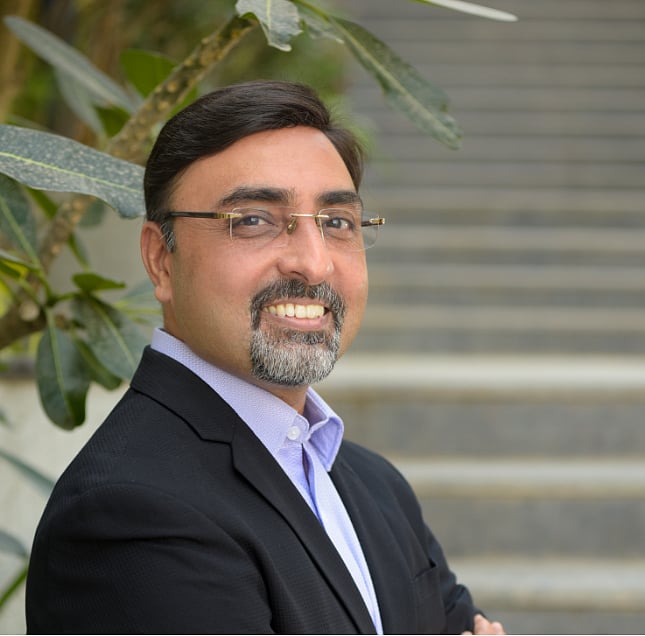
In a conversation with IMA India, Nand Kishore Khandelwal, Group Chief Financial Officer, Premier Energies, discussed how the finance function is supporting this transition, from evaluating technology and allocating capital to managing overseas risks and realising value from digital investments. His perspective highlights the role of financial discipline in building a business that can grow confidently while remaining resilient.
Tell us about Premier Energies: What does the company do and where does it sit within the solar energy value chain?
Premier Energies, headquartered in Hyderabad, is currently India's largest integrated solar cell and module manufacturer, with a capacity of 10 GW. We are progressing towards backward integration into ingot and wafer manufacturing, with the objective of becoming a fully integrated 10 GW ingot-to-module player by December 2028.
We operate in a sector central to India's energy transition, energy security and long-term manufacturing ambitions. Under our Mission 2028, we have announced a capital expenditure programme of Rs 12,500 crore, covering expansion across the solar value chain and diversification into battery energy storage systems, transformers and aluminium extrusion. We are also evaluating opportunities to expand operations in the US and Europe, further strengthening our presence in the clean energy sector.
What distinguishes our business is that we are not merely assembling a finished product. We are building manufacturing capabilities in a technology-intensive industry where scale, efficiency, quality and continuous technological advancement determine long-term competitiveness.
Over the years, Premier has evolved from a relatively modest manufacturing enterprise into a significant participant in India's solar ecosystem. Today, our ambition extends beyond capacity expansion. We are focused on building an institution that can compete on technology, cost, quality and financial strength, both domestically and internationally.
I see Premier as a manufacturing and technology enterprise operating in the clean energy sector, rather than simply a solar equipment manufacturer. That distinction is important because it influences how we allocate capital, develop capabilities and think about the future.
You joined Premier Energies in 2023, ahead of its public listing. How have your priorities evolved, and where can finance make the greatest contribution to the company's next stage of growth?
When I joined the organisation, the immediate priorities were to strengthen financial systems, institutionalise governance, prepare Premier for public markets and establish a financial architecture capable of supporting rapid growth.
The IPO in September 2024 was an important milestone, but I have always viewed an IPO as a means rather than an end. It provides access to capital, improves institutional credibility and creates a platform for the next phase of growth. The real responsibility begins after listing, when the organisation must consistently deliver on the expectations it has created.
My priorities have therefore evolved from preparing the organisation for capital markets to ensuring that capital is deployed efficiently and that growth translates into sustainable shareholder value.
Today, finance must contribute at three levels. First, maintaining financial discipline through capital allocation, working capital management and balance sheet strength. Second, enabling strategic decisions through meaningful business insights rather than merely reporting historical numbers. And third, building scalable systems, processes and governance so that the organisation can grow without a corresponding increase in complexity and overheads.
I believe the greatest contribution of a CFO is not in controlling expenditure but in influencing the quality of decisions through which capital is committed.
What changes have you noticed in the company’s culture since it went public? What has shifted in terms of how the company plans, takes decisions and communicates its long-term decisions since it became a listed entity?
The most significant change is the transition from an entrepreneurial organisation to an increasingly institutionalised enterprise. Before listing, decisions can often be taken within a relatively small leadership group, with considerable flexibility and speed. After listing, the same decisions must also be evaluated through the lenses of governance, transparency, stakeholder expectations and long-term value creation.
This does not mean losing entrepreneurial agility. In fact, preserving that agility while introducing institutional discipline is one of the more important challenges for a growing company.
We have placed greater emphasis on structured planning, formal capital allocation processes, stronger internal controls, predictable reporting and clearly defined accountability.
Communication has also changed. As a listed company, we are accountable to a much wider group of stakeholders. It becomes important not only to deliver results but also to communicate the strategy, the rationale behind investments and the long-term direction of the business consistently.
I often think of this transition as moving from a business driven primarily by entrepreneurial conviction to one where entrepreneurial conviction is supported by institutional processes and financial discipline. Both are necessary. Processes without entrepreneurship can make an organisation bureaucratic, while entrepreneurship without discipline can make growth unsustainable.
Solar manufacturing is capital-intensive and the technology evolves quickly. What are the key factors that determine whether an investment delivers attractive returns? How do you fund expansion while keeping the balance sheet strong?
In solar manufacturing, capacity creation by itself does not guarantee returns. The economics of an investment are determined by several interconnected factors: technology selection, capital cost, manufacturing efficiency, capacity utilisation, product quality, supply-chain competitiveness and the timing of investment. Technology selection is particularly critical. An investment that appears attractive based on current economics can lose competitiveness if technology evolves faster than anticipated. Therefore, our evaluation goes beyond conventional project IRR and payback calculations. We examine technology obsolescence risk, sensitivity to selling prices, raw material costs, utilisation levels and the ability of the asset to remain competitive over its economic life.
The second dimension is capital structure. I strongly believe that growth should be funded in a manner that preserves the organisation's ability to withstand an adverse business cycle. We look at a combination of internal accruals, equity and appropriately structured long-term debt, while paying close attention to cash generation, working capital and debt-servicing capacity.
There is also an important distinction between accounting profitability and cash generation. A manufacturing business can report healthy profits and still experience financial stress if working capital and capital expenditure are not managed carefully.
Ultimately, I would rather pursue slightly more measured growth with financial resilience than maximise capacity at the cost of balance sheet flexibility.
What role have government schemes and incentives such as the PLI played in supporting solar manufacturing in India, and what more could the government do to help the industry?
Government initiatives, including tariff and non-tariff measures and incentives such as PLI, have played an important role in creating the conditions for domestic solar manufacturing to scale.
For many years, the global solar supply chain developed around manufacturing ecosystems outside India, particularly China. Establishing a competitive domestic manufacturing base requires substantial investment, technological capability and time. Policy initiatives have helped create investment visibility and encouraged manufacturers to commit capital towards domestic capacity and deeper integration across the value chain.
However, incentives alone cannot create a globally competitive industry.
In my view, the next phase of policy support should focus increasingly on building the underlying ecosystem: domestic availability of critical materials, upstream manufacturing, research and development, technology partnerships, skilled manpower and competitive infrastructure. Encouragingly, policymakers recognise these priorities and are actively working towards strengthening the domestic manufacturing ecosystem.
Policy consistency is equally important. Manufacturing investments have long economic lives, and investors need a reasonably predictable regulatory environment.
We should also distinguish between creating domestic capacity and creating globally competitive capacity. The ultimate success of industrial policy should be measured not by how much capacity is established with support, but by how competitive that capacity becomes without continuing support. That, I believe, should be the longer-term objective.
China has a significant lead in solar manufacturing technology, in terms of both scale and cost. What will it take for Indian manufacturers to become globally competitive?
China's competitive advantage in solar manufacturing has developed over decades. It is the result of scale, deep supply-chain integration, technological investment, manufacturing experience and a highly developed industrial ecosystem. It would be unrealistic to assume that India can replicate this advantage simply by installing manufacturing capacity. Our competitiveness will have to be built systematically.
First, we need scale, because manufacturing economics improve significantly when fixed costs, procurement and technological investments are spread across larger volumes. Second, we need deeper integration of the domestic supply chain. Dependence on imported materials and components creates cost disadvantages and exposes manufacturers to external disruptions. Third, we must invest continuously in technology, automation, productivity and manufacturing excellence. Fourth, we need stronger collaboration between industry, research institutions and technology providers.
I also believe India should avoid approaching this purely as a low-cost manufacturing competition. Reliability, product quality, traceability, supply-chain diversification and customer confidence can create meaningful differentiation. India has an opportunity to become an important alternative manufacturing hub in the global solar ecosystem. But global competitiveness cannot be permanently built on protection. Protection may provide the time to develop capabilities; competitiveness must ultimately come from those capabilities themselves.
As you assess opportunities in overseas markets, how do you weigh potential returns against tariffs, currency exposure and customer risk?
International markets offer significant opportunities, but they also introduce risks that are different from those in the domestic market. We evaluate opportunities on a risk-adjusted basis rather than looking at headline margins alone. Tariff structures, trade regulations, rules of origin, currency movements, logistics costs, customer creditworthiness and the stability of the regulatory environment can materially influence the economics of a transaction. A market offering higher selling prices does not necessarily offer better returns once these factors are considered.
Currency and commodity risks require particular attention, as volatility can affect both revenues and procurement costs. We manage these exposures through appropriate financial hedging and disciplined commercial contracting.
Customer selection is equally important. Revenue growth is meaningful only when it translates into timely cash realisation.
We also assess the sustainability of demand. Markets driven by temporary policy advantages or short-term supply disruptions need to be approached differently from those with structurally strong demand.
My approach is that international expansion should improve the overall resilience and profitability of the business, rather than merely increase its geographical presence. We believe in entering a market because we have a sustainable competitive proposition, not simply because a temporary opportunity offers attractive margins.
What are your priorities for digital transformation, and where do you see the greatest opportunity to improve business performance?
I have always believed that digital transformation is fundamentally a business transformation exercise, not an IT implementation exercise. Technology creates value only when it changes how an organisation operates, makes decisions and serves its stakeholders.
At Premier, our focus has been on creating an integrated digital backbone capable of supporting a growing and increasingly complex manufacturing organisation. The implementation and integration of enterprise systems, including SAP S/4HANA, form an important part of this journey. But ERP is only the foundation. The larger opportunity lies in using reliable, integrated data to improve planning, manufacturing efficiency, procurement, inventory management, working capital and management decision-making.
I see three important priorities. The first is process standardisation and automation, reducing manual interventions, duplication and dependence on individuals. The second is real-time visibility into business performance, so that management can identify deviations and take corrective action before they become financial outcomes. The third is developing analytical and predictive capabilities, where data can support better forecasting, resource allocation and operational decisions.
I also see considerable opportunity in integrating financial and operational information. Traditionally, organisations review financial performance after operational events have already occurred. Digital systems should progressively reduce that gap. The real objective is to move from reporting what happened to understanding why it happened, and eventually, anticipating what may happen next. That is where technology can make a substantial contribution to business performance.
How do you assess the returns on technology investments, particularly when the benefits are difficult to quantify?
This is an interesting question because traditional investment appraisal methods do not always capture the full value of technology. Some benefits are relatively straightforward to quantify: manpower productivity, lower transaction costs, reduced inventory, faster processing, improved asset utilisation or lower operating expenditure. But other benefits are less visible and sometimes more important. For example, what is the financial value of having reliable information available at the right time? What is the value of preventing a compliance failure, strengthening internal controls or enabling management to make a better decision?
These benefits may not always translate into an immediately measurable return, but they can materially influence business performance and risk. I generally evaluate technology investments across three dimensions: measurable financial benefits, operational and organisational improvements, and strategic capabilities created for the future. There is another aspect I consider important. A technology project should not be judged merely by whether the system has been implemented successfully. Implementation is a milestone. Value realisation is the objective.
Unless business processes change, people adopt the system and management uses the resulting information effectively, even a technically successful implementation may deliver limited returns. Therefore, ownership of technology benefits must rest with business functions, not exclusively with IT.
In my view, the best technology investments are those that simplify the organisation while making it more capable.
What experience has most shaped your approach as a CFO, and what did it teach you about balancing growth with financial discipline?
Having worked across different industries, business environments and stages of organisational development, one of my strongest learnings is that growth and financial discipline are not opposing objectives. In fact, sustainable growth requires financial discipline. Over my career, I have seen organisations navigate expansion, restructuring, acquisitions, operational challenges and changing market conditions. Each phase reinforces the importance of understanding the underlying economics of a business rather than being guided solely by its reported financial performance.
My experience at Premier, particularly through the IPO and the subsequent expansion journey, has further strengthened this belief. An IPO brings visibility, capital and expectations. But the responsibility of management is to ensure that the capital entrusted to the organisation creates enduring value. I have also learnt that the CFO's role cannot be confined to financial reporting or control. A CFO must understand the business deeply enough to participate meaningfully in decisions concerning strategy, technology, operations, people and capital allocation.
At the same time, financial discipline should not become an excuse for avoiding calculated risks. Businesses cannot grow without taking risks. The responsibility is to understand those risks, price them appropriately and ensure that the organisation has the resilience to manage outcomes that may differ from expectations.
Perhaps the most important lesson from my journey is that a good CFO does not merely protect the balance sheet but helps create the conditions in which the business can grow confidently without compromising its financial strength. And over time, I have come to believe that professional success is not simply measured by the scale of the business one helps build, but also by the strength of the institution and the capabilities one leaves behind.