
Reinventing a Legacy
How Raymond is Winning Over Younger Consumers
For a legacy brand, past success can be both a strength and a source of inertia. How do you modernise a century old brand and attract younger consumers without weakening the identity that generations have trusted? How do you change established ways of working while retaining the commitment of people who have spent their careers with the organisation? And who is ‘The Complete Man’ – embodying Raymond’s iconic brand identity – today?
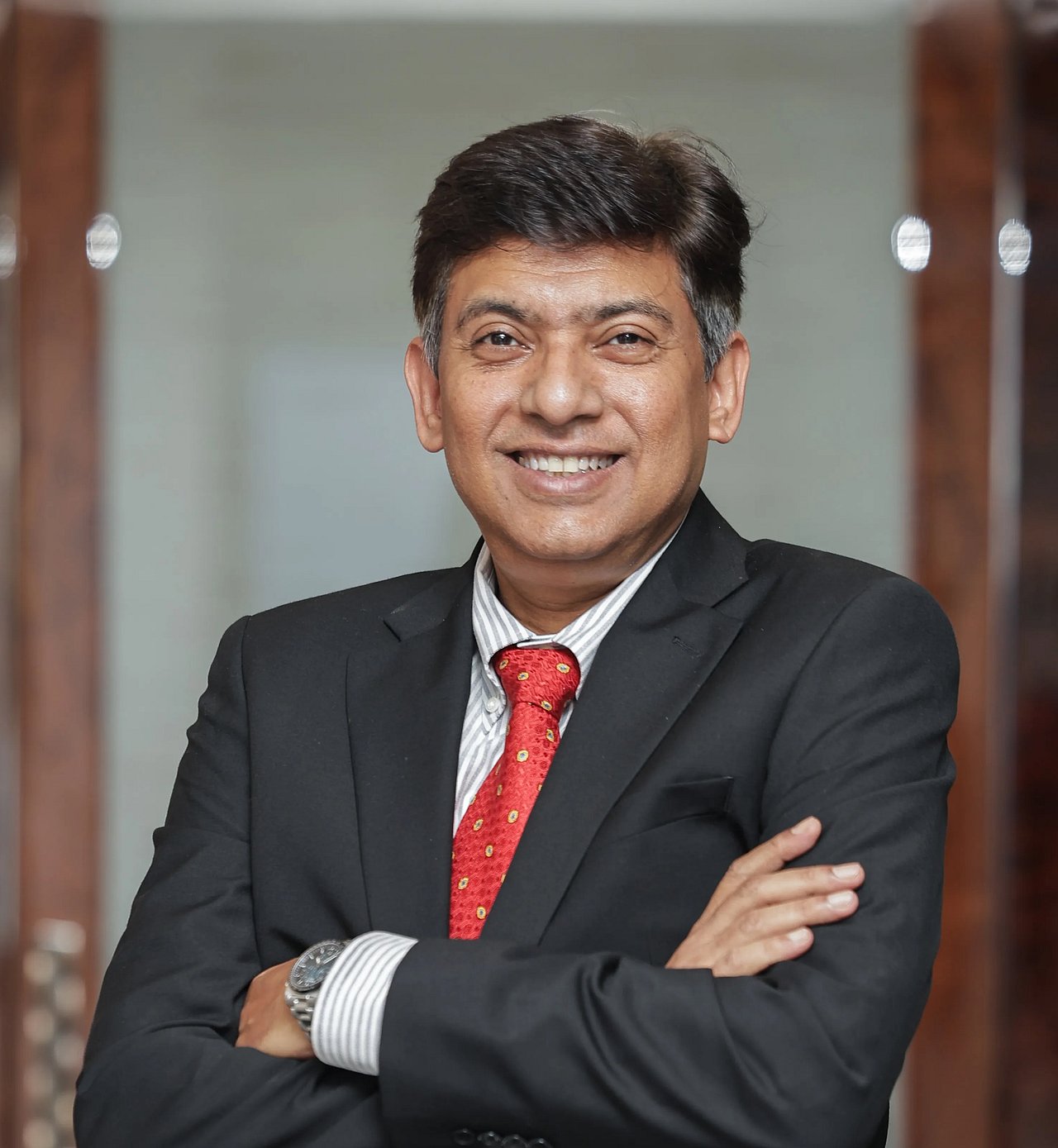
With a long heritage in textiles and tailoring, Raymond Lifestyle operates across four core businesses: branded textiles, branded apparel, garment manufacturing and high-value cotton shirting. Its portfolio includes Raymond Ready to Wear, Park Avenue, ColorPlus, Parx and Ethnix, alongside a manufacturing and export business supplying international brands. In this conversation, Satyaki Ghosh, CEO of Raymond Lifestyle, discusses why formal wear still has a future, what physical stores offer that online shopping cannot, where he sees opportunities in overseas markets, and much more.
You took charge of Raymond Lifestyle at an important point in its evolution as an independently listed company. What were your immediate priorities, and what did you identify as the biggest opportunity for the business?
I joined Raymond at a strategic moment. Following the listing of the company, there had been an eight- to nine-month leadership gap. I therefore came in navigating some uncertainty.
I saw an opportunity to modernise the organisation through digitalisation and move it from a siloed verticals structure to a more inclusive and collaborative one. These remain central priorities.
Another opportunity I saw was to attract younger consumers, which requires a cultural shift within the organisation. The aim is to become younger in our thinking, not just by bringing in younger people and but also by enabling longstanding employees to embrace new ways of working.
In a trusted organisation such as ours, people can become inward-looking, relying on Raymond’s reputation and established practices rather than looking closely at how consumers and competitors are changing. What brought success 15 years ago will not necessarily bring success today. We need to stay nimble, humble and responsive to changes around us, and we are already working towards that shift.
For those accustomed to established ways of working, this can be a significant adjustment. Managing that change is therefore also an important part of the transformation.
How do you modernise a century-old brand for younger consumers without diluting the identity and trust it has built over time?
Our strategy to modernise the brand rests on two important pillars- premiumisation and casualisation. As consumers move up the income ladder, they look for brands that offer genuine value at the higher end. Not necessarily luxury, but still premium.
Casualisation is equally important, and ColorPlus leads on that front. We are seeing double-digit like-for-like growth there, which we expect to reach high double-digits this year. But every brand in the portfolio has to move the needle. Across our more formal brands - Raymond Ready-to-Wear, Park Avenue and others - the casual wear accounts for only 15-17% of the range. Our goal is to increase this share to 20%, and eventually 25%.
We are introducing more casual prints that can be worn every day, because we believe our fabric needs to become relevant to the consumer’s everyday wardrobe. To encourage consumers to explore our fabric, we are offering free tailoring services through select schemes in our stores.
On the marketing front, we are working with our team to redefine who the ‘Complete Man’ is today. The concept remains relevant, but the person it represents has evolved. The modern man is no longer defined by the traditional macho image or the ‘angry young man’ persona. Today’s man is more urban and individualistic. He makes his own choices, is in touch with his emotions and connected to his family.
Our new ColorPlus campaign featuring Abhay Deol reflects this new outlook. It centres on the idea of ‘living the pause’ — that life does not have to move at a relentless pace. Younger people are taking pauses between meetings, taking time out of work or going on sabbaticals. Work is only a part of their life, but no longer its defining feature. Abhay embodies this philosophy through his distinctive outlook on life and the deliberate choices he makes in his career.
The idea is not to move away from what Raymond has always stood for, but to make those strengths relevant to a new generation of consumers.
As dress codes become more relaxed across workplaces and social occasions, what is the future of formal wear, and how must Raymond reinvent the category?
People expect formal wear to shrink, but that has not been our experience. India’s young population and rising incomes continue to bring new consumers into the category. Young people are moving from college, where they may wear T-shirts and ripped jeans, into their first jobs, where they need formal clothing. Formal wear is not going away, but the business needs to explore other sources of growth. Weddings remain another important source of demand. Our new Autumn Winter collection of Ethnix — ‘Wedding Stories’ acknowledges this demand. Ethnic wear has become more prominent across different functions, but formal wear still has a place, particularly at receptions. Formal wear is therefore not going away, but the business needs to explore other sources of growth.
Raymond’s strength in suiting and fabrics is immense. When you think of suits, you think of Raymond. For many consumers, their first wedding suit is a custom-tailored Raymond suit, and our stores provide both the fabric and the tailoring. That association remains a significant strength, and the business continues to grow, even if the pace is slower than before.
Consumers today also buy much more than earlier generations did at the same age. Affordability has improved, incomes have increased and many families now have greater financial security. Alongside that, spending attitudes have changed. People want to enjoy experiences and live in the present. All of this supports consumption, even as the mix of what people buy has evolved.
Raymond’s strength in suiting and fabrics is immense. When you think of suits, you think Raymond- Satyaki Ghosh
Raymond is strongly associated with menswear. Do you see an opportunity to expand into womenswear, or will men remain the priority?
Menswear remains the priority because we have built a billion-dollar business in it. Raymond is seen as an iconic brand and an expert in menswear, so we are not going to move away from that strength. But womenswear is a natural extension. We are working on a 5-year strategic plan, and one opportunity emerging from that exercise is women’s Western wear.
That would build on our strength in Western clothing. Women’s ethnic wear, by comparison, is a very entrepreneur-driven business. Preferences vary considerably across regions, and women’s fashion is evolving continuously. That makes it difficult to build a national brand with the volumes and working capital efficiency a large company needs. An entrepreneur can establish a presence in one market and then move to another; a larger business starts with fixed costs that require sufficient scale.
Women’s Western wear is growing, but its reach is still relatively concentrated in cities such as Mumbai, Delhi and Bengaluru. Formal clothing for women can also include Indian wear, so even younger consumers in metropolitan cities do not necessarily wear Western clothing to work every day. That again limits the size of the addressable market.
I hear from women in my own family that they would welcome more options in Western wear. So there lies an opportunity which we are still exploring, and I see us entering at some point. Whether that would be under Raymond or Park Avenue is still to be determined.With suppliers, the approach is exploratory rather than coercive. We do not push requirements down the value chain. Many of our supplier relationships have been built over decades, which allows for openness and trust. When the company shares the business and economic benefits it has gained from sustainability initiatives, suppliers are more willing to explore similar changes at their end. In our experience, thoughtful and strategic investments in strengthening ESG standards deliver tangible economic benefits and ultimately flow into the bottom line.
What role do you think physical stores will continue to play now that much of purchasing has shifted online?
Physical stores serve a different purpose than online stores. They help with brand building, showcasing the range of products and expressing what the brand stands for. As opposed to online shopping which is confined to a small screen and quick scrolling, consumers can see much more of the range in physical stores. It also helps with the visual merchandising and bringing the brand to life. A presence in major malls and high streets also builds recognition and credibility. Consumers may visit a store, select products and then purchase them online, so stores help build trust even when the transaction happens elsewhere. Online platforms are getting better at this, but the full brand expression still comes through in a store.
There is also the question of profitability. Building a profitable apparel business purely online is very difficult, particularly in India. Large discounts, free shipping, processing returns can out pressure on margins. The prices consumers expect online may not always support the same products and fabrics offered in stores, so brands need to adapt their offerings across channels.
This is the reason why so many businesses that started online are building a physical presence. Stores support both the consumer experience and the commercial model. Physical retail is not going away in India; it continues to offer something that online alone cannot provide.The question of revenue came up and the honest answer is that revenue was not the motive. The motive was reducing the burden on the environment. But the economics follow regardless.
Where do you see international growth opportunities, and how does your global supply chain support the business?
The US remains the most attractive market because of its size and the scale of orders. Most of our export business is B2B, where we manufacture for brands such as JCPenney, Brooks Brothers, Tommy Hilfiger, Calvin Klein and Men’s Wearhouse. Large American orders allow our factories to run longer production cycles with fewer changeovers, which brings down the cost per unit.
However, tariff uncertainty has pushed us to explore other markets, particularly the UK and Europe. We already have a strong position in suits in the UK, with clients such as Charles Tyrwhitt and Ted Baker, and are now receiving shirt orders as well. In Europe, prospective clients are evaluating samples and placing initial orders to assess our quality and delivery. Building these relationships takes time because buyers already have established suppliers. From making initial contact and sending fabric swatches and sample lengths to securing a first order, the process can take around 18 months, or longer if we miss a season. That is why client development needs to begin well before trade agreement benefits take effect. Lower duties can then improve our price competitiveness and help us turn those initial orders into larger business.
Diversifying also helps reduce our dependence on the US, although it remains an important market. There are operational trade-offs: UK and European orders generally do not match US volumes, so we have to balance the opportunities against more frequent production changeovers and their impact on productivity.
We serve international clients through three models: supplying fabric for garments manufactured elsewhere, manufacturing garments using client-supplied fabric, or providing both fabric and garment manufacturing. Alongside this B2B business, we have Raymond shops in markets including Bangladesh, Nepal and the Middle East, offering branded fabrics, clothing and custom tailoring.
Our international presence extends beyond sales to sourcing. Around 95% of our wool comes from Australia, with the remainder sourced from countries such as South Africa, Uruguay and New Zealand. The fine flax used for our linen comes primarily from France and Belgium. We source cotton both domestically and internationally, including Pima cotton from the US and Giza cotton from Egypt, while our man-made fibres are largely sourced in India.
Our mills also supply external clients, while our apparel brands draw on manufacturing networks that include China, Bangladesh, Vietnam and Indonesia. The sourcing model varies according to the product and the needs of each business.
What are the things you discovered about Raymond Lifestyle after joining which differed from your initial views of the brand?
Two things stood out. The first was the strength of the brand. From outside, Raymond seems strong, but only when you come in do you realise how deeply that recognition and trust run. You see it particularly in the relationships with our trade partners. Some have gone on to build very large businesses yet retain an immense attachment to Raymond because of the role it played in their journey. The respect they extend to the CEO is really respect for the brand and what it means to them.
The second was how many people have built their careers here. Across our factories and offices, there are people who joined as management trainees, graduate engineer trainees or fashion graduates and have spent 25+ years with the group, moving through different roles. Their dedication to the company is what gives it immense strength. That continuity can also make cultural change more challenging, but the depth of commitment is something you do not fully anticipate from outside. It was a very pleasant surprise.
Which lessons from your experience across different industries are proving most valuable at Raymond?
My experience at Aditya Birla Group gave me an understanding of the textile value chain and large-scale manufacturing. Managing factories employing ~3,000 people, working with unions and improving productivity require a distinct set of skills. Having worked in an Indian organisation also helped me understand Raymond’s culture and gave me a softer landing.
At L’Oréal, I learned about digitisation and brand building. It is a very digital-first business, with expertise in building brands such as L’Oréal, Maybelline and Garnier. Those are capabilities I am trying to bring into Raymond.
At PepsiCo, particularly in Frito-Lay, I learned sales, distribution and a passion for execution. You can go into the hills and find Kurkure at a small shop—that kind of distribution capability stays with you.
Spencer’s gave me hands-on retail experience, including planning stores and thinking about how to differentiate them from competitors. I am bringing together these lessons from different industries and stages of my career to contribute what I can to Raymond.
What would you like your tenure to be remembered for?
For a CEO, the biggest priority is people. If you do not take your people along with you, you will struggle to connect with your consumers as well.
Internally, I would like to be remembered for creating a cultural shift towards a more inclusive, fair and high-performance working environment. Externally, I would like to have brought a stronger consumer-driven, outside-in perspective into the business. From the company’s standpoint, the priority is to increase shareholder value through high growth and impeccable governance.