
Responsibility In Action
How Silox India Is Embedding ESG In Strategy & Governance
Sustainability in most manufacturing companies is seen as a disclosure/compliance requirement that needs to be ticked and filed. However, this is starting to change with growing realisation of climate change consequences, tightening of ESG regulations, BRSR core mandates and growing scrutiny by investors and global customers on ESG performance. In sectors like speciality chemicals, where the product travels into food, cosmetics, tyres and textiles, the expectations run deeper. Companies that have embedded accountability into how they operate, rather than assigned it to a sustainability function, will be much better prepared for not only surviving, but thriving through sustained value creation.
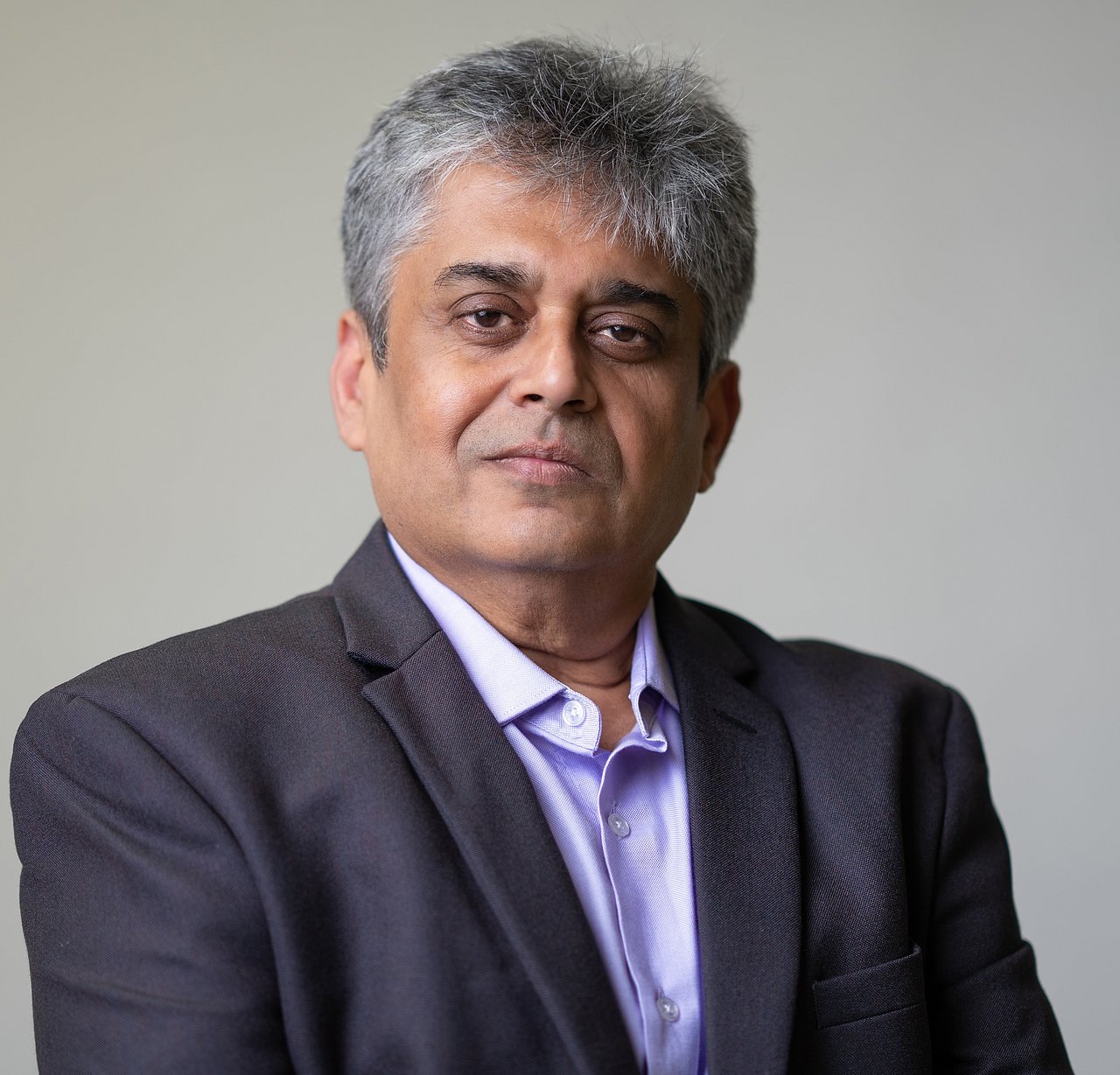
Silox India is a speciality chemicals manufacturer established in 2001 as a joint venture between Belgium-based Silox SA and Transpek Industry Limited. It brings together international expertise with local manufacturing capabilities to serve customers in India and global markets. Today, it is recognised for its specialised expertise in zinc- and sulphur-based chemistry. It holds national leadership across its key product segments and ranks first globally in two of them, with customers across nearly 65 countries in sectors ranging from textiles, protective paints & coatings, tyre & rubber to personal care and food applications. What distinguishes the company is its founding premise: that reliability to customers, fairness to suppliers, compassion for employees and responsibility to the surrounding community are not sustainability objectives to be achieved on a timeline, but key operating principles. In this conversation, Rajesh Vaidya, CHRO and Sustainability Head, tells us what that premise looks like when translated into supply-chain accountability, circularity, water use and employee ownership.
India's regulatory environment around sustainability is often seen as less demanding than Europe's. For a company co-owned by a Belgian partner and having operations in India, how has that played a role in your sustainability journey?
I would push back on the premise slightly. Indian environmental laws have become considerably more stringent over the years than they are often given credit for. But the more important point is that Silox India has never treated regulatory compliance as the ceiling for its sustainability efforts. Our promoters and shareholders take a broader view of the business, considering its responsibilities to stakeholders as important as commercial gains.
There have been several instances in which Silox India’s shareholders and Board have prioritised capital investments that strengthen workplace safety, and improve emission standards, even when the company was already compliant with prevailing regulations. These decisions reflect a deeper commitment to employees and surrounding communities, who are regarded as important stakeholders in the company’s long-term growth. That makes the job of improving considerably easier.
There is a widespread belief in industry that customers want sustainability in principle but are rarely willing to pay a premium for it in practice. Silox’s experience seems different. Is that a function of who your customers are, or does the business case for sustainability eventually resolve the pricing tension on its own?
Both, and the two are connected. Our customer base consists largely of market leaders in their respective segments — nationally and globally. These are companies that do not just respond to ESG expectations; many of them set the standard. When customers of that calibre embed sustainability into their own operations, it flows into their value chains. We have been an eager participant in that. The interactions are substantive and the outcomes benefit both sides.
A similar dynamic holds with suppliers. Our top 10% of suppliers are comparably evolved. They bring best practices into the relationship and the conversations are genuinely productive. Across both ends of the value chain, the business case has been understood: organisational resilience, risk reduction, continuity of business.
On the pricing question, the trajectory of solar is instructive. Twenty years ago it was prohibitively expensive, but the moment it reached a competitive price point, adoption was rapid and near-universal. LED lighting followed the same curve. Customers are not unwilling to pay a premium for sustainable alternatives, they are unwilling to pay one that does not make business sense. Once the economics align, the conversation changes. It is a matter of when, not whether.
How does Silox India work with customers and suppliers to build shared accountability and a more sustainable ecosystem?
With customers, the conversation are quite progressive and dynamic. They will typically come to us and say they want to see a reduced carbon footprint in the products they source. We respond with a plan: which raw material inputs we are shifting to lower-carbon alternatives, what our energy transition timeline looks like. Customers are willing to pay a fair price if they see a clear value and business sense in a product.
With suppliers, the approach is exploratory rather than coercive. We do not push requirements down the value chain. Many of our supplier relationships have been built over decades, which allows for openness and trust. When the company shares the business and economic benefits it has gained from sustainability initiatives, suppliers are more willing to explore similar changes at their end. In our experience, thoughtful and strategic investments in strengthening ESG standards deliver tangible economic benefits and ultimately flow into the bottom line.
Silox India treats waste as a resource rather than a disposal problem. What does that mean in practice and where has it created the most tangible value?
The starting point was a reclassification of what our hazardous waste actually was. In a typical chemical industry, hazardous waste typically goes to landfill or incineration. When we looked more carefully at our waste streams, we found that a significant portion could serve as an input for other industries after undergoing appropriate treatment. Roughly 50% of our hazardous waste has been converted this way. That is a 50% reduction in landfill load, and it comes from a change in perspective: the material is not waste, it is a resource/ input for other industries.
The question of revenue came up and the honest answer is that revenue was not the motive. The motive was reducing the burden on the environment. But the economics follow regardless.
Water is the clearest illustration of how that thinking compounds. We set two targets: reduce water intake, and reduce what we discharge. The results, when we started measuring seriously, were better than we anticipated. Water withdrawal across our operations fell by more than 40% over four years. At one facility alone, we were purchasing 50-55 tankers of water every day. That number is now 15-18.
The business saving is real. Moreover, fewer tankers on the road means a lower probability of road accidents, lower emissions from the supply chain. Each intervention connects to the next. That is what circularity looks like when it is working.
The 40% water reduction you described, what were the processes that produced it, and does the same discipline apply to your Scope 1 and 2 targets?
The approach is straightforward in principle. You map every point at which a resource enters the system, trace how it moves through each process stream, and ask where there is waste that can be reduced, reused or recycled. Water carries particular urgency in India given the scale of water stress nationally, and the technologies to support conservation are well developed. The discipline is less about innovation and more about attention.
What helps is having management conviction behind the effort. Once that is there, and you have the right process and the right people working on it, results follow. Whether every program will continue to yield 40% improvements indefinitely is a different question, returns do not compound at the same rate forever. Once sustainability enters the organisational DNA, you are in a virtuous cycle of continuous improvement rather than chasing individual targets.
On Scope 1 and 2 specifically: we have set a 55% reduction target for the period between 2021 and 2030. As of now, we have achieved approximately 25%, i.e. at around 50% of the target.
You hold both the CHRO and Sustainability Head titles simultaneously. How do you think leadership and culture help make sustainability a part of everyday decision-making?
Conviction has to start at the top, this is unambiguously a board and CXO-level subject. But how you cascade it makes all the difference. You can assign targets and measure compliance. Or you can bring people into the reasoning: why water matters, why road safety matters. The second approach takes longer. But when the buy-in comes, employees become champions rather than recipients of a mandate. That is when culture forms.
The water program produced an example that has stayed with me. We used the security gate as a monitoring point. Every tanker entering the facility had to be logged, and a security supervisor was made accountable for tracking the daily count. Over time, this person became genuinely engaged. He started watching for spillages, observing consumption points, noticing patterns. When I told him the numbers had held, his response was not about water. It was about pollution. Nobody had asked him to make that connection.
In formal terms, what he was describing was a reduction in our Scope 3 emissions. He did not know that language, but he had arrived at exactly the same conclusion through his own observation and his own sense of responsibility. That, for me, is what culture looks like when it is working.
The road safety program followed a similar logic. Gujarat is not ahead of the curve on road discipline, and a large share of our workforce commutes on two-wheelers. We ran education programs, distributed quality helmets at 70% subsidised cost and made wearing one a condition of entry. We also produced a comic-book safety guide, with an Asiatic lion as mascot to carry the message home.
What we had not anticipated was the families. Children of employees, invited to participate in drawing and poetry competitions on workplace safety, had absorbed the material and drawn their own conclusions. Several had started reprimanding their fathers for not wearing helmets outside the factory. When a daughter holds her father accountable, the hardiest man listens.
As these examples show, these behaviours were not imposed by leadership, rather they grew organically from a shared sense of safety and responsibility among our employees and their families. That is when sustainability becomes part of the culture rather than just another compliance requirement.
If you could identify one mindset shift that the manufacturing sector most needs to make on sustainability, what would it be?
The two defining challenges of our time are climate change and employment disruptions through new technologies, AI being the case in point. The first concerns the consequences of sustained destruction of natural systems. The second is about technology being misused rather than deployed in service of human potential. Most of the discourse around AI is centred on displacement rather than augmentation of human capacity. Its ability to strengthen human capabilities could have a compounding effect on organisational productivity and effectiveness. Both of these are ‘human’ as well as ‘planet’ problems. Business exists to answer human wants and needs. These are the real wants and needs of our time. That reframing is where the mindset shift begins.
The companies that have made it have a different quality about them. Patagonia is the example I keep returning to. They have named Earth as their largest stakeholder. When you accept that premise, everything else follows. And in some form or the other, the business gets its returns. Their Black Friday campaign, where they advertised against buying their own jacket, was something nobody had never seen before, and it inspired others. A second company, also in consumer goods, gave its entire workforce a paid holiday on Black Friday and asked them to spend the day outside with their families. These are companies that are genuinely loved, even by their employees. Younger candidates tell us, directly, that they want to be associated with a company doing meaningful work. The manufacturing sector would do well if it took that seriously.
Is the Gen Z orientation toward sustainability a genuine generational shift, or is it simply where they are in their careers?
The innate logic is that Gen Z has more decades ahead of them than the previous generational cohorts in the workforce today. They do not want to spend those decades on a planet that is water-stressed, barren and overheated. The concern is logical, it is self-interest calculated over a longer time horizon.
What I observe at Silox is that engagement deepens when people understand the why. When they understand the purpose behind an initiative, their engagement naturally rises. Silox India is also seeing greater voluntary participation from Gen Z and millennial employees in its community projects.
In that sense, sustainability is not separate from talent, culture or business performance. It is increasingly part of what makes an organisation credible to customers, trusted by communities and attractive to the next generation of employees.